SC—09 / ESS.MOD
The Modern Professional
A study of contemporary menswear — and of the formal shirt's changing place in it.
Long read — nine chapters
Introduction
Men's professional dressing used to be a uniform. Today it is closer to a vocabulary — fewer fixed rules, more choices, and a greater need to understand what each choice says.
For much of the last century, the working man's wardrobe was settled long before he opened it. A dark suit, a pale shirt, a tie and polished shoes: the variations were small and the meanings well understood. That certainty has loosened. Many offices now ask for something less formal; many others ask for nothing specific at all. The result is more freedom and, for many men, more uncertainty.
This essay looks at how that change happened and what it means for the clothes we choose. It is not a history lesson or a set of commandments. It is a study of the modern professional wardrobe — what has stayed, what has gone, and why the formal shirt, against the odds, has become more important rather than less.
Chapter I — The uniform
Traditional business dressing
Traditional business dressing was built on repetition. The suit — usually navy, charcoal or grey — did most of the talking. Beneath it, the shirt was white or pale blue, its collar firm enough to hold a tie, its cuffs neat at the wrist. Pattern was kept small: a fine stripe, perhaps, or a discreet check. Shoes were black or dark brown leather, polished and laced.
The appeal of this uniform was clarity. Everyone knew the rules, so nobody had to think about them. A man could be judged on his work rather than his wardrobe, and the clothes signalled seriousness, reliability and respect for the setting. Its weakness was the same thing: it left very little room for the individual, for the climate or for comfort.
It is worth remembering that this way of dressing has not disappeared. It remains the standard for many formal occasions, courtrooms, boardrooms and ceremonies — and its logic still underpins nearly every rule of good dressing that followed.
Chapter II — The vocabulary
Contemporary office clothing
Contemporary office clothing is defined less by a single outfit than by a range. In many workplaces the suit is reserved for particular days, the tie has become optional and the jacket is often unstructured. Trousers might be wool, cotton or a blend; shoes might be leather lace-ups one day and loafers the next.
What has changed most is the logic. The old question was "What is the rule?" The new question is "What does this setting need from me today?" A client presentation, an internal review and a team lunch may now call for three slightly different answers — and the modern professional is expected to read the room.
Through all of this, the shirt has quietly taken centre stage. When the jacket comes off and the tie is left at home, the shirt is what people see. Its fit, colour and condition carry more of the message than ever before.
When the jacket comes off, the shirt is the outfit.
Chapter III — Shape
Modern shirt silhouettes
The contemporary shirt is generally cleaner and closer to the body than its predecessors, with details pared back or reconsidered.
- S.01
A closer body
Slim and contemporary fits follow the torso more closely than the generously cut shirts of the past. The aim is a clean line, not tightness — the shirt should still sit flat when you move. Our guide to shirt fits explains the differences.
- S.02
Quieter collars
Collars have tended towards moderate points and semi-spread shapes that look right with or without a tie. Band collars, once rare in offices, appear on relaxed days. See the collar studies.
- S.03
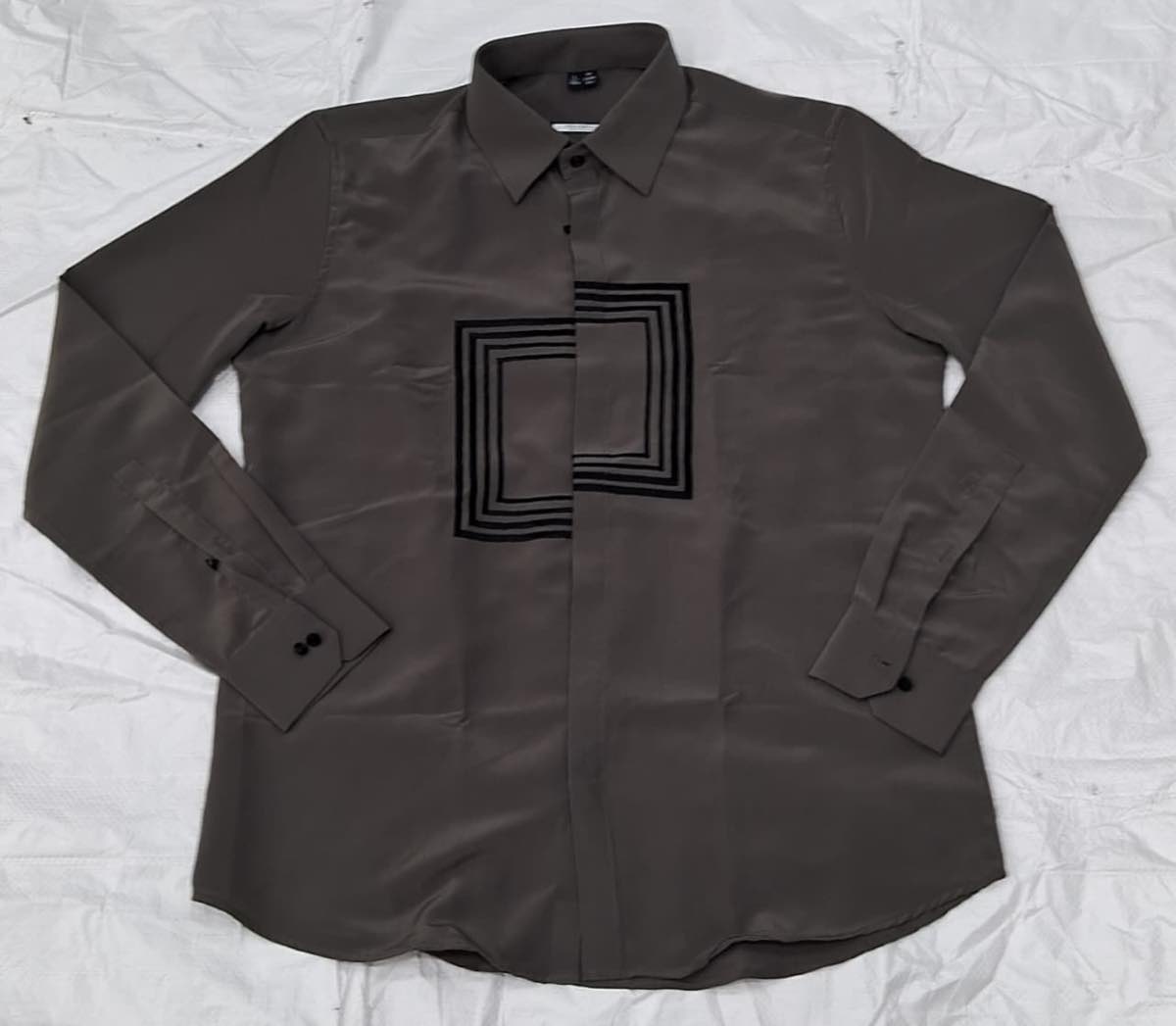
The concealed placket
A fly front hides the buttons behind a fold of cloth, leaving an uninterrupted surface — the minimalist's placket, as seen on the taupe shirt above.
- S.04
Considered details
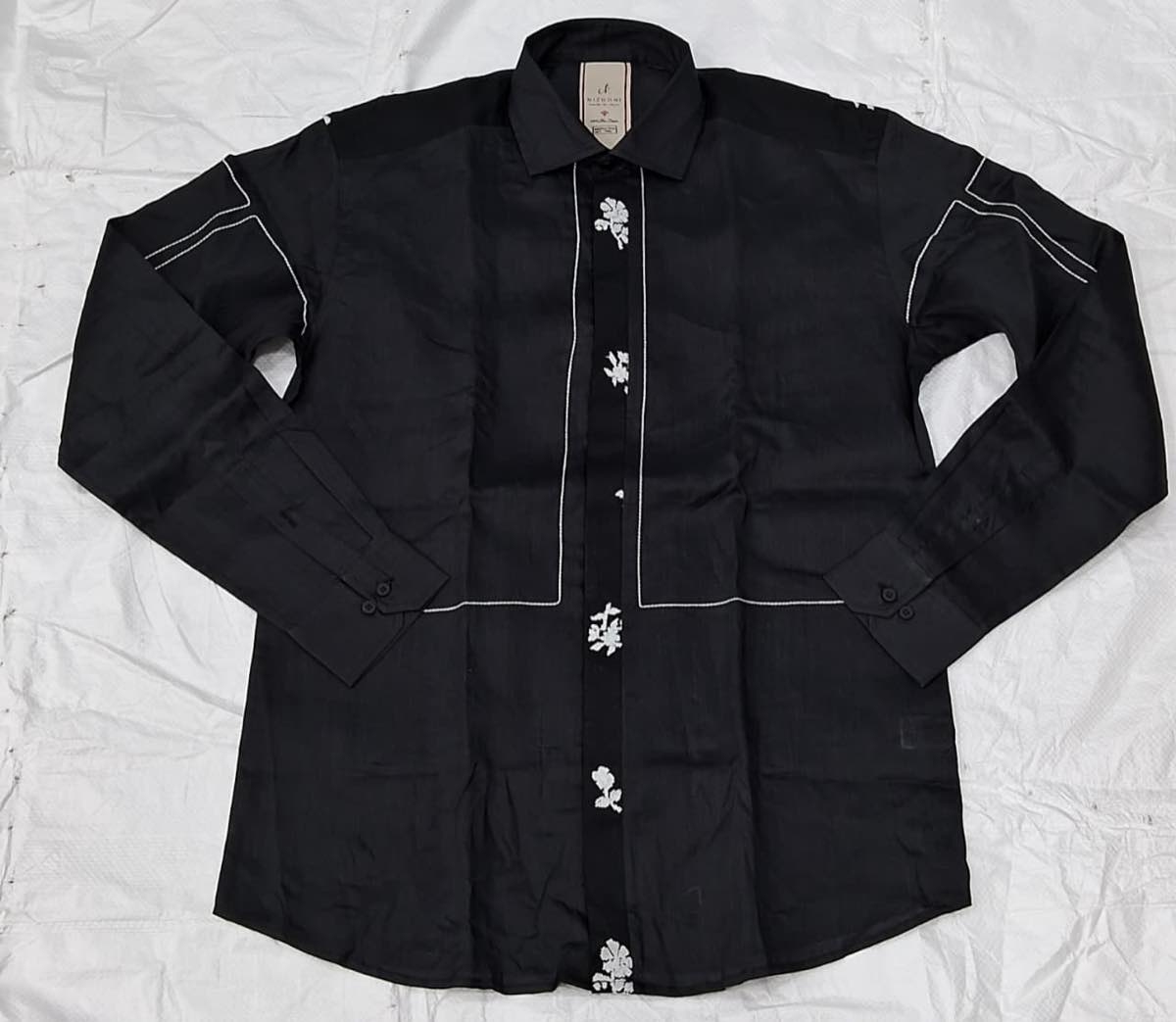
Piping, embroidery and graphic motifs bring expression to occasion and evening shirts. On everyday office wear shirts, detail moves inward: contrast collar bands, neat cuffs, a fine texture.
Chapter IV — The spectrum
Changing workplace dress codes
In many workplaces there has been a broad shift away from the daily suit towards business casual. The change has been gradual and uneven — it varies by industry, by city, by company and even by team.
Some organisations have formalised it with written guidelines; others simply stopped enforcing the old ones. Client-facing roles, finance, law and senior meetings often remain more formal, while creative, technical and internal roles have generally relaxed further. What has emerged is not a single new code but a spectrum, and most professionals now move along it during an ordinary week.
- 01
Business formal
Dark suit, white or pale shirt, tie, black lace-ups.
- 02
Business professional
Suit or blazer and trousers, a crisp formal shirt; tie as the setting asks.
- 03
Business casual
Formal shirt without a tie, tailored trousers or chinos, leather shoes.
- 04
Smart casual
Oxford, check or textured shirt, chinos, loafers or clean sneakers.
- 05
Casual
Short sleeves, relaxed prints, denim — outside most offices.
The middle of the spectrum — business casual — is where most working weeks now happen, and where the formal shirt does its hardest work. The Business Wardrobe maps it day by day.
Chapter V — Reduction
Minimalist formal styling
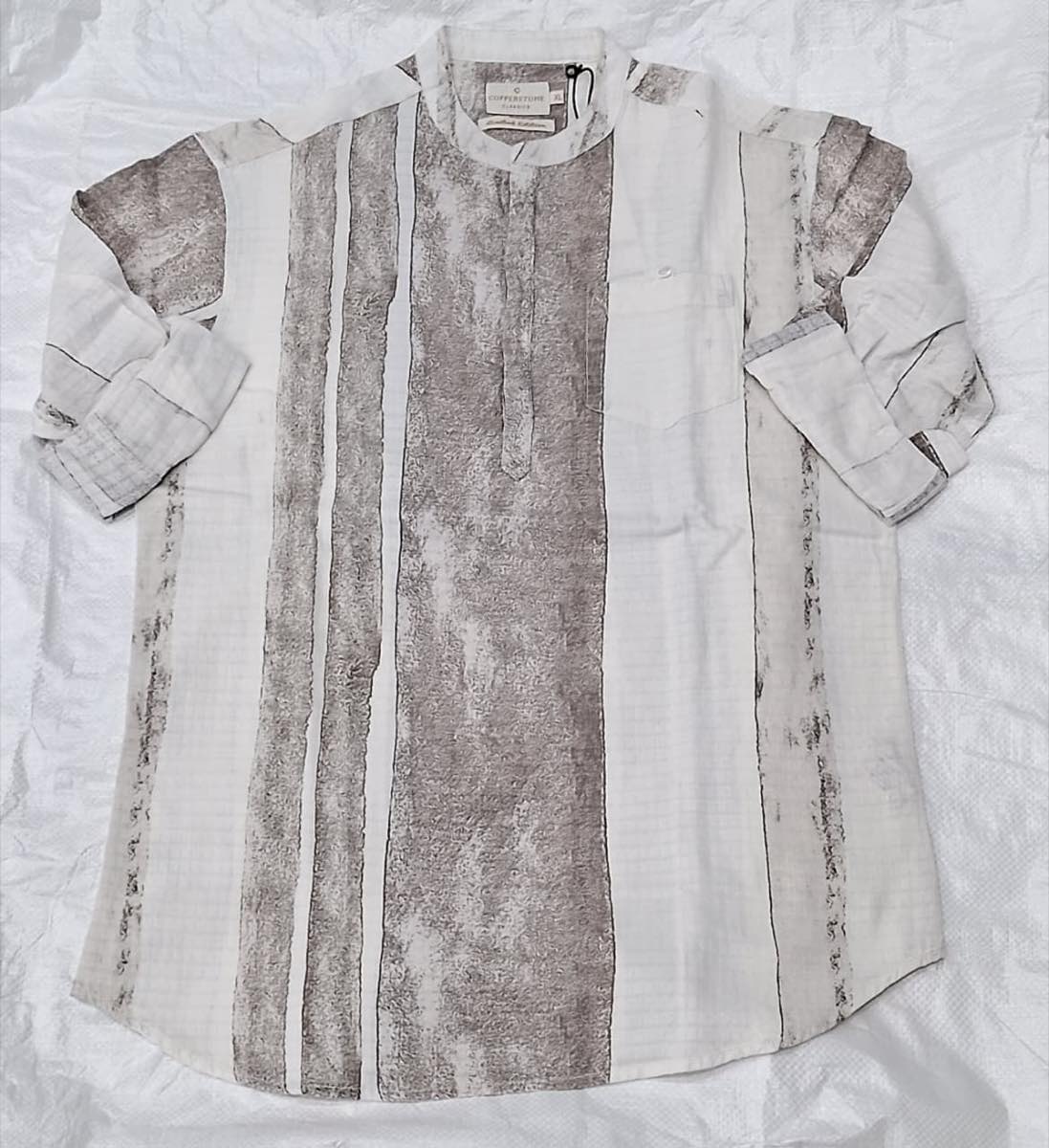
As dress codes relaxed, one of the most persuasive responses was not more decoration but less. Minimalist formal styling relies on a narrow palette, clean lines and good cloth — the outfit is quiet, so the details have to be right.
- Two or three colours. Navy, grey, white, black and stone, combined tonally rather than in contrast.
- Texture over pattern. A dobby weave, a subtle slub or a textured panel adds depth without noise.
- Fewer visible details. Concealed plackets, plain cuffs, no breast pocket — or a single, neat one.
- Fit is everything. With nothing to distract the eye, the shoulder seam and sleeve length are seen at once.
The shirt shown is a relaxed, band-collar interpretation — closer to smart-casual than to business formal — but it shows the principle clearly: texture and tone doing the work that pattern once did.
Chapter VI — The whole picture
Personal presentation
Fewer rules do not mean lower standards. They mean the standards have moved — from the uniform to the person wearing it.
Condition
A well-pressed shirt with a clean collar communicates care more clearly than an expensive one that has been neglected. Ironing the collar, cuffs and placket takes minutes and changes everything.
Fit
Shoulder seams at the edge of the shoulder, cuffs at the wrist bone, a collar that closes without strain. These checks matter more than any trend.
Consistency
Presentation is cumulative. Shoes, belt, watch and grooming should belong to the same idea as the shirt — the details that make an outfit look intended.
Appropriateness
Dressing slightly above the expected level is rarely a mistake. Dressing well below it usually is. When unsure, add a jacket and leave the tie in your bag.
Chapter VII — Range
Versatile wardrobes
The modern wardrobe has to cover more settings with fewer pieces. Versatility comes from a core of shirts that move easily between formal and relaxed — supported by a smaller number of shirts with more character.
The core and the accent
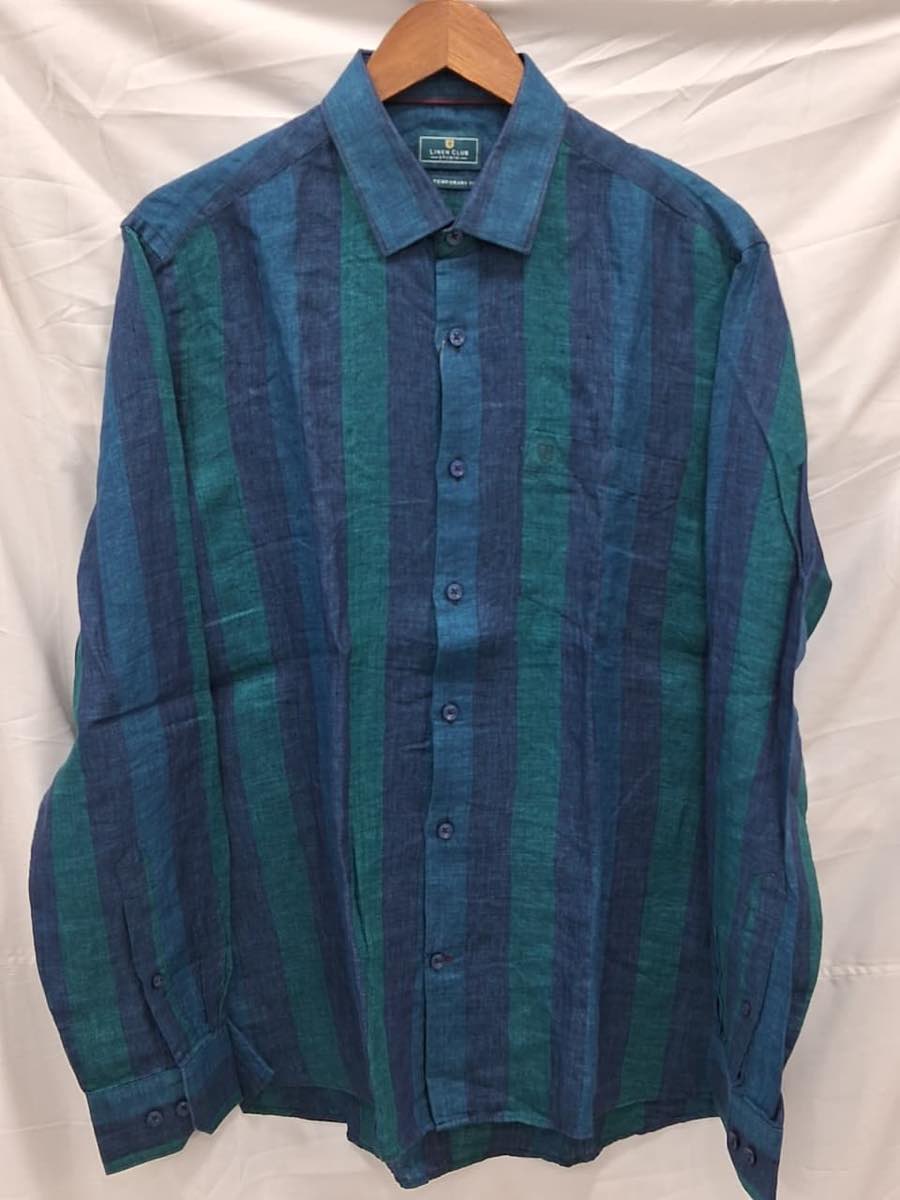
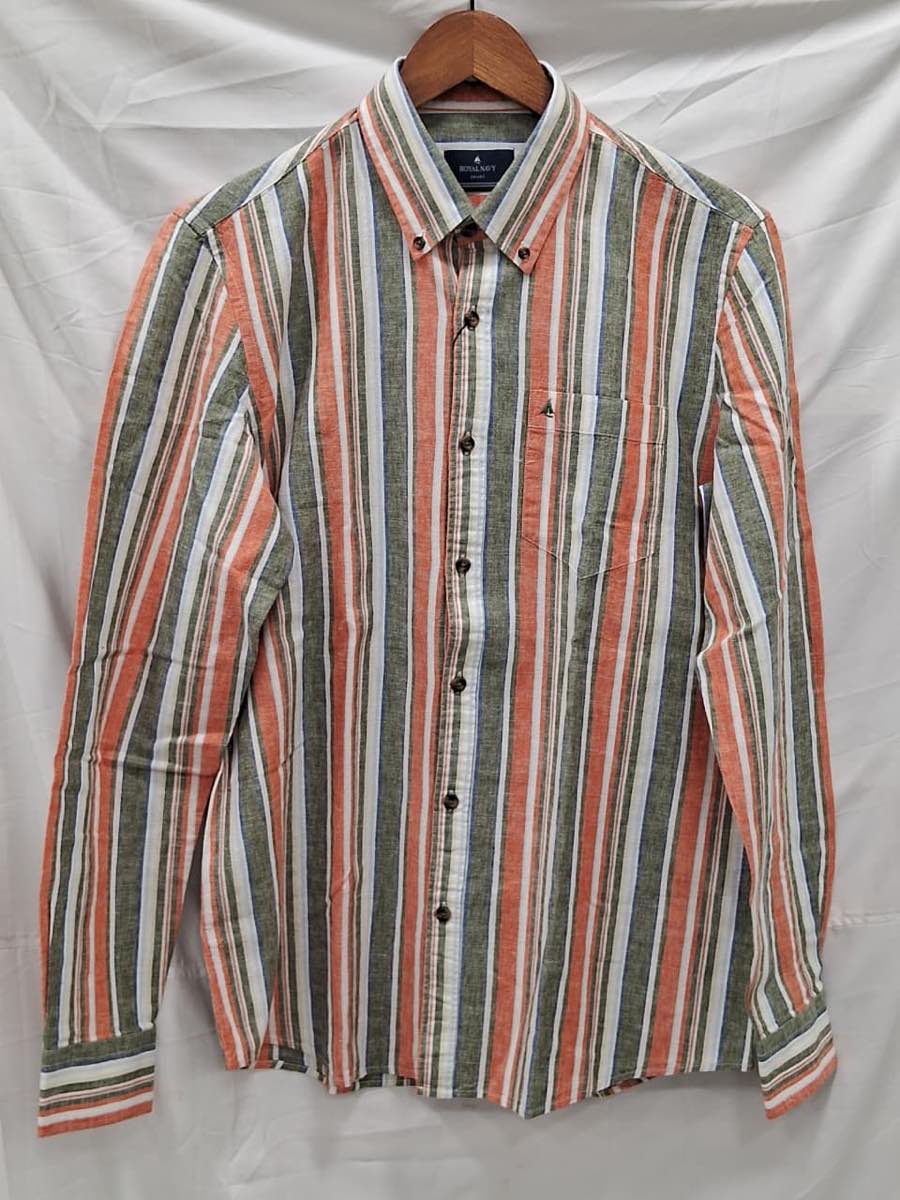
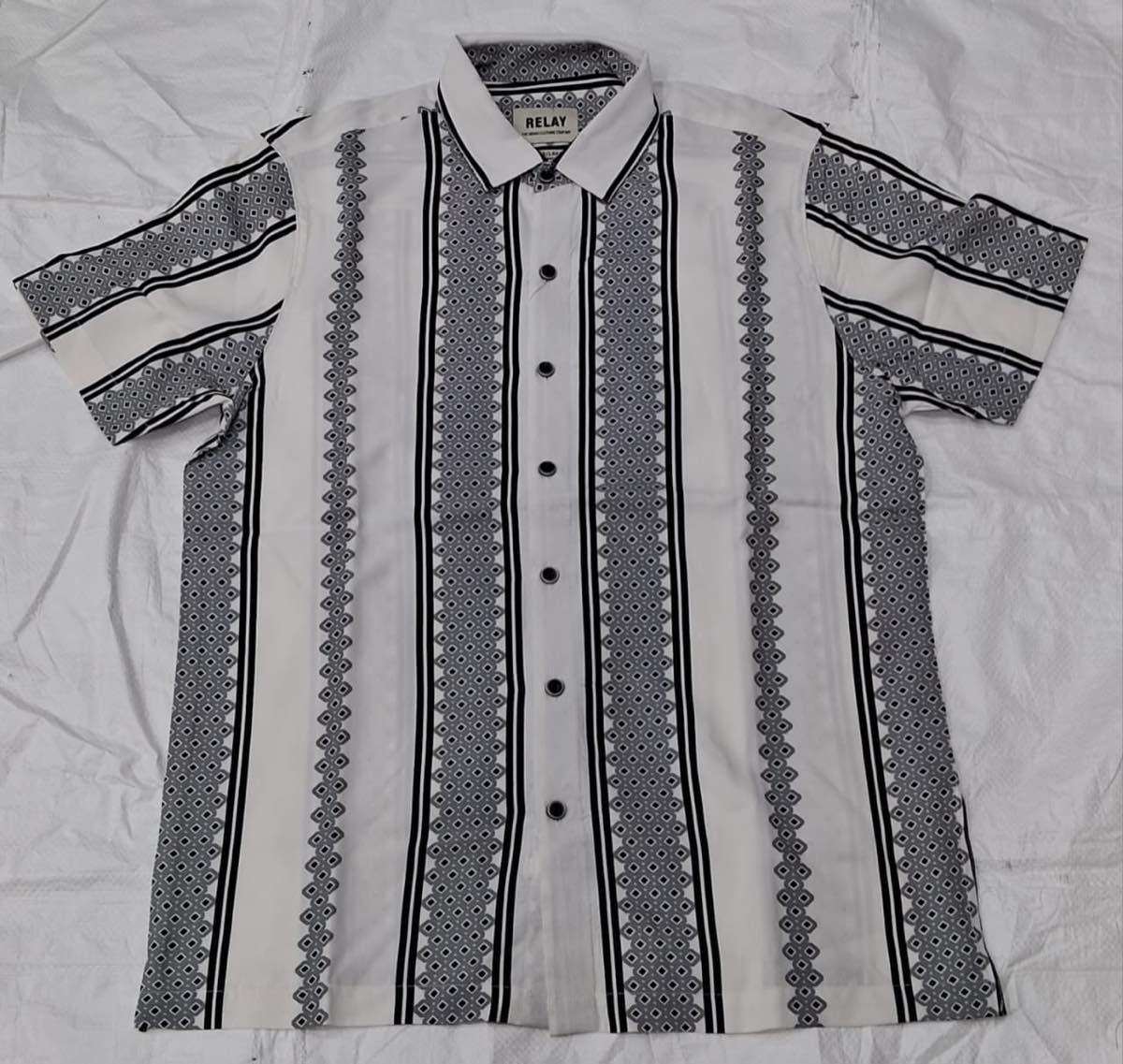
The core of a versatile professional wardrobe is simple: white and light blue shirts in a fit that suits you, a fine stripe, a small check, perhaps a pale pink or lilac. These work under a suit, with a blazer and on their own with chinos. The accent shirts — the bold stripes, the textured linens, the short-sleeve prints shown here — belong to relaxed days, travel and weekends.
Keeping that distinction clear is what makes a wardrobe versatile. It means the core shirts are never wrong for the office, and the accent shirts are enjoyed where they look their best. For a practical list, read how to build a versatile office shirt wardrobe or see the capsule wardrobe.
Chapter VIII — Balance
Comfort and appearance
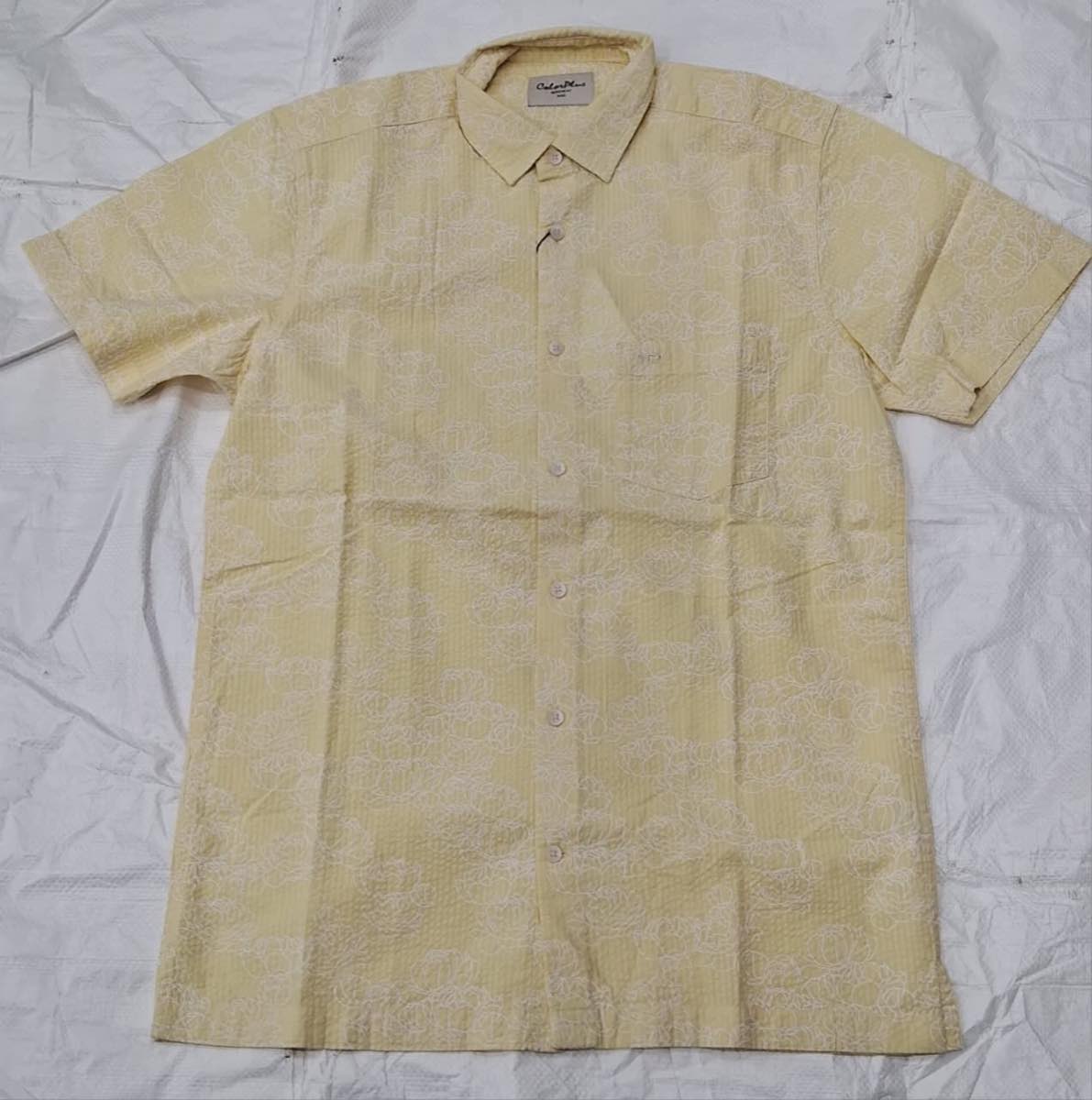
One of the clearest changes in professional dressing is the expectation that clothes should feel good to wear all day. Comfort used to be treated as the opposite of smartness; today the best professional clothes try to deliver both.
Much of that balance is found in the cloth. Breathable cottons, lighter weaves and textured fabrics such as seersucker-style cloths help in warm, humid weather — a practical consideration in a city like Mumbai. Some cotton blends add a little stretch or easier care; the effect depends on the blend, so it is worth feeling the fabric and reading the label. Our men's shirt fabric guide covers the differences.
Fit matters as much as fabric. A shirt that is too tight restricts movement and pulls at the buttons; one that is too loose billows and looks careless. The comfortable shirt is usually the one that fits correctly.
Short-sleeve shirts are comfortable and right for many relaxed settings, but they remain casual. In most offices a lightweight long-sleeve shirt, sleeves neatly rolled when appropriate, keeps the professional line.
Chapter IX — Two registers
Formal vs smart-casual
Most professional dressing now happens in one of two registers. Knowing which one you are in is half of getting it right.
| Element | Formal | Smart-casual |
|---|---|---|
| Shirt | Solid, fine stripe or small check; smooth poplin or twill | Oxford, linen-blend, bolder stripes and checks |
| Collar | Spread, semi-spread or point; built for a tie | Button-down, soft or band collar, worn open |
| Jacket | Suit or structured blazer | Unstructured blazer, or none |
| Trousers | Suit or wool trousers with a crease | Chinos, cotton trousers, smart dark denim |
| Shoes | Black or dark brown oxfords and derbies | Loafers, suede, brogues, clean leather sneakers |
| Tie | Expected or advisable | Optional; knit ties if worn |
| Tuck | Always tucked | Tucked, or untucked if the hem is made for it |
For worked combinations, see the men's shirt styling guide — including shirts with blazers and shirt and tie coordination.
Coda — The argument of this essay
The changing role of the formal shirt
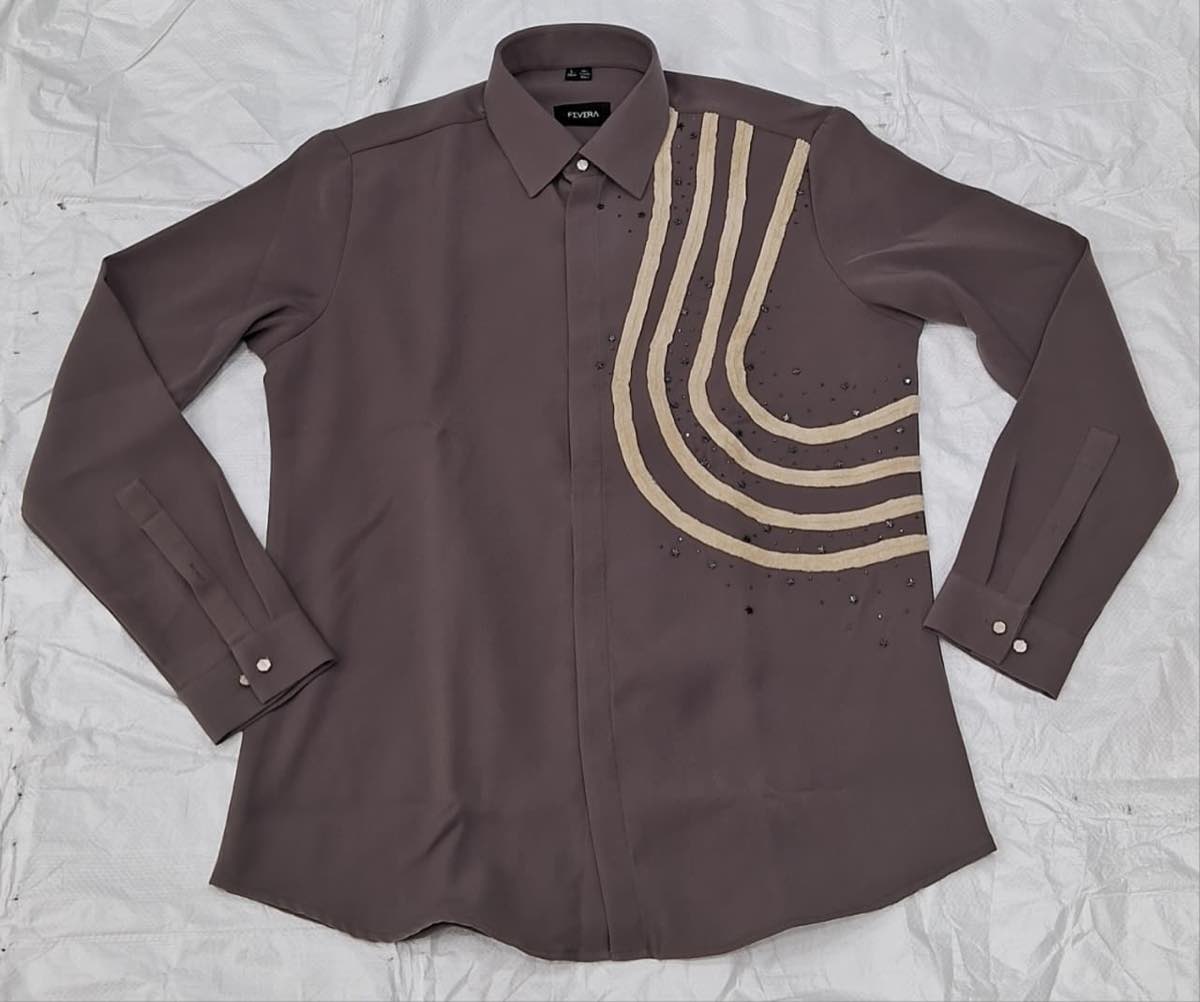
It would be easy to assume that, as offices became less formal, the formal shirt would fade along with the tie. The opposite has happened. The shirt has lost its supporting role and gained a leading one.
In the traditional wardrobe, the shirt was almost a background — a pale field framed by a jacket and crossed by a tie. Few people noticed it unless something was wrong. In the contemporary wardrobe, with the jacket often absent and the tie often optional, the shirt is the largest, most visible garment a man wears to work. It is asked to look appropriate without help.
The tie was optional. The shirt never was.
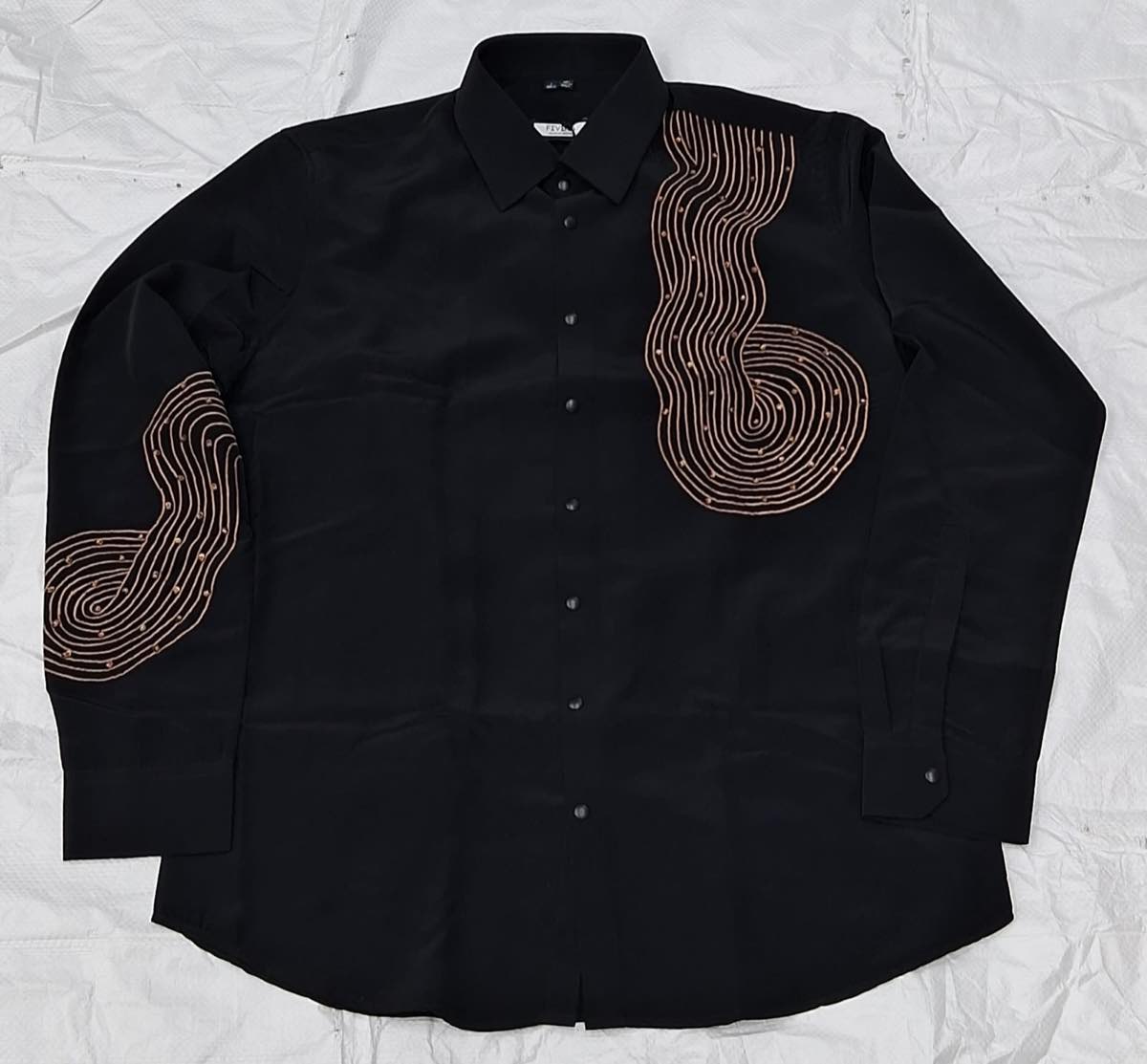
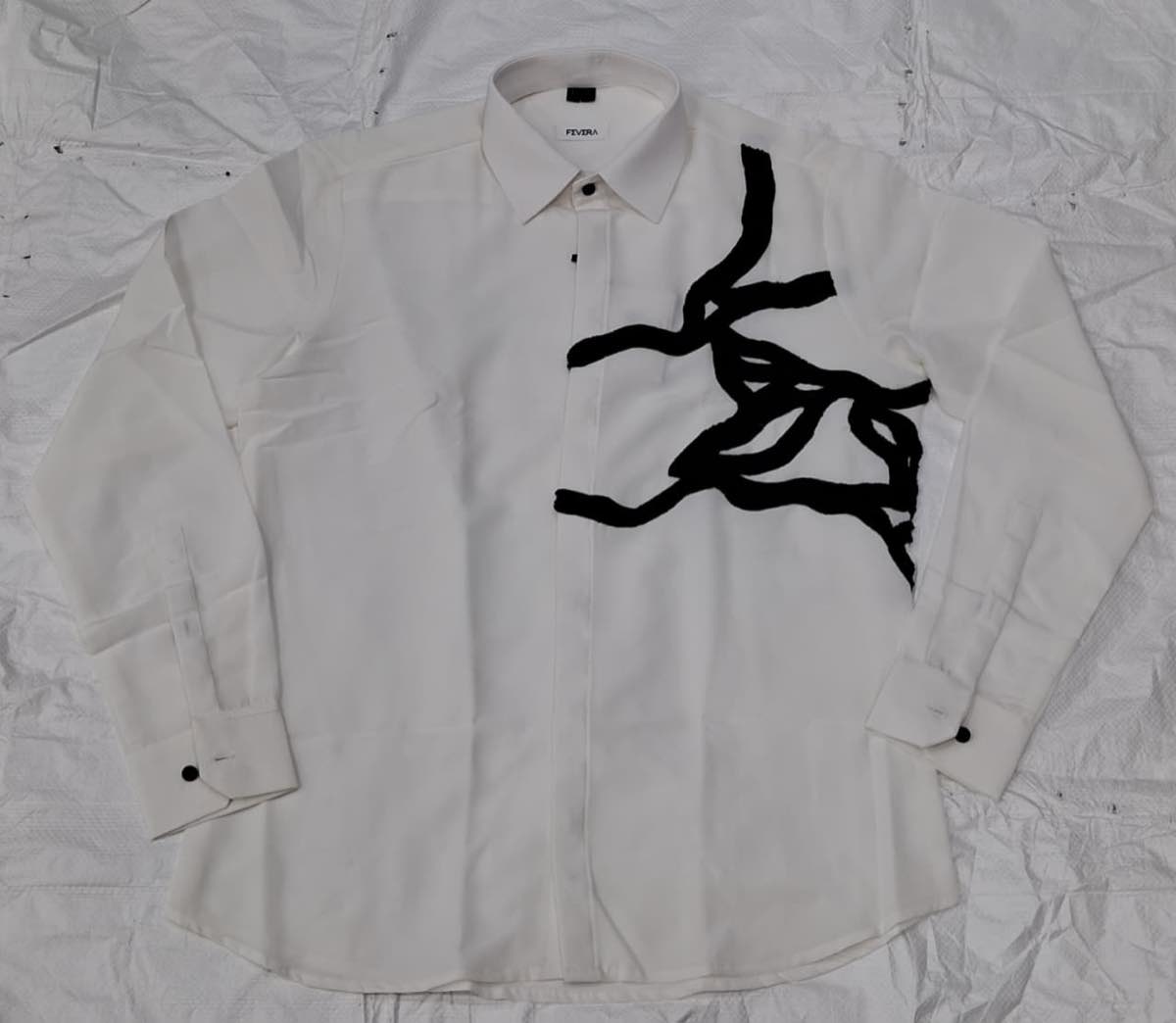
That responsibility has changed what we look for. Fit matters more, because there is no jacket to disguise it. Collars must look right open as well as closed. Colour and pattern are chosen more carefully, because they carry the outfit alone. The everyday formal shirt has become quieter and more precise, while the shirts at the expressive end — embroidered, printed, piped and corded, like those on this page — have moved into the space once filled by the evening suit and the occasion outfit.
The formal shirt has also become a bridge. The same white or light blue shirt can sit under a suit for a formal meeting, under a soft blazer for a client lunch and on its own with chinos on a Friday. Few garments in a man's wardrobe cover as much ground. That is why, even as everything around it has relaxed, the well-fitted formal shirt remains the foundation of a men's professional wardrobe.
The modern professional, then, does not need more rules. He needs a clear understanding of a few principles — fit, proportion, colour, care and context — and a handful of good shirts that let him apply them. The rest is personal.
Continue the study
From essay to wardrobe
If this essay has you rethinking your working shirts, start with fit and colour, then build outwards. To see shirts in person, visit Options Mall in Vile Parle West or call +91 8369381345 and ask the team about current styles.
- 02Contemporary formal shirts in the Formal Shirt Index
- 03Slim, regular and contemporary fit formal shirts
- 06Formal shirt colour combinations
- 07The Business Wardrobe for men's corporate shirts
- J13Choosing shirt colours for professional dressing
- J04Slim fit vs regular fit shirts
- 10All essays in the Style Journal