Classification — 10 entries / 4 families
The Formal Shirt Index Formal shirts for men, classified.
A working vocabulary for the most useful garment a man owns. Ten entries — from the classic office shirt to the minimal micro-pattern — each read the same way: how it looks, where it belongs, what it pairs with, and what to watch for.
Every shirt carries several codes at once. A light blue, regular-fit, fine-stripe office shirt is CLR.BLU FIT.REG PAT.STR IDX.CLS — so read the chapters in any order, and combine them.
How the index works
Four families,
ten entries
Men's formal shirts differ along four independent lines: the character of the design, the cut of the body, the surface of the cloth and, most visibly, the colour. Each family below answers one question. Together they describe almost any office wear shirt you will meet in Mumbai or anywhere else.
-
Family A — IDX
Character
How traditional is the design?
-
Family B — FIT
Cut
How closely does it follow the body?
-
Family C — PAT
Surface
What does the cloth show?
-
Family D — CLR
Colour
Which two colours anchor a wardrobe?
IDX.CLS — Family A / Character
Classic formal shirts
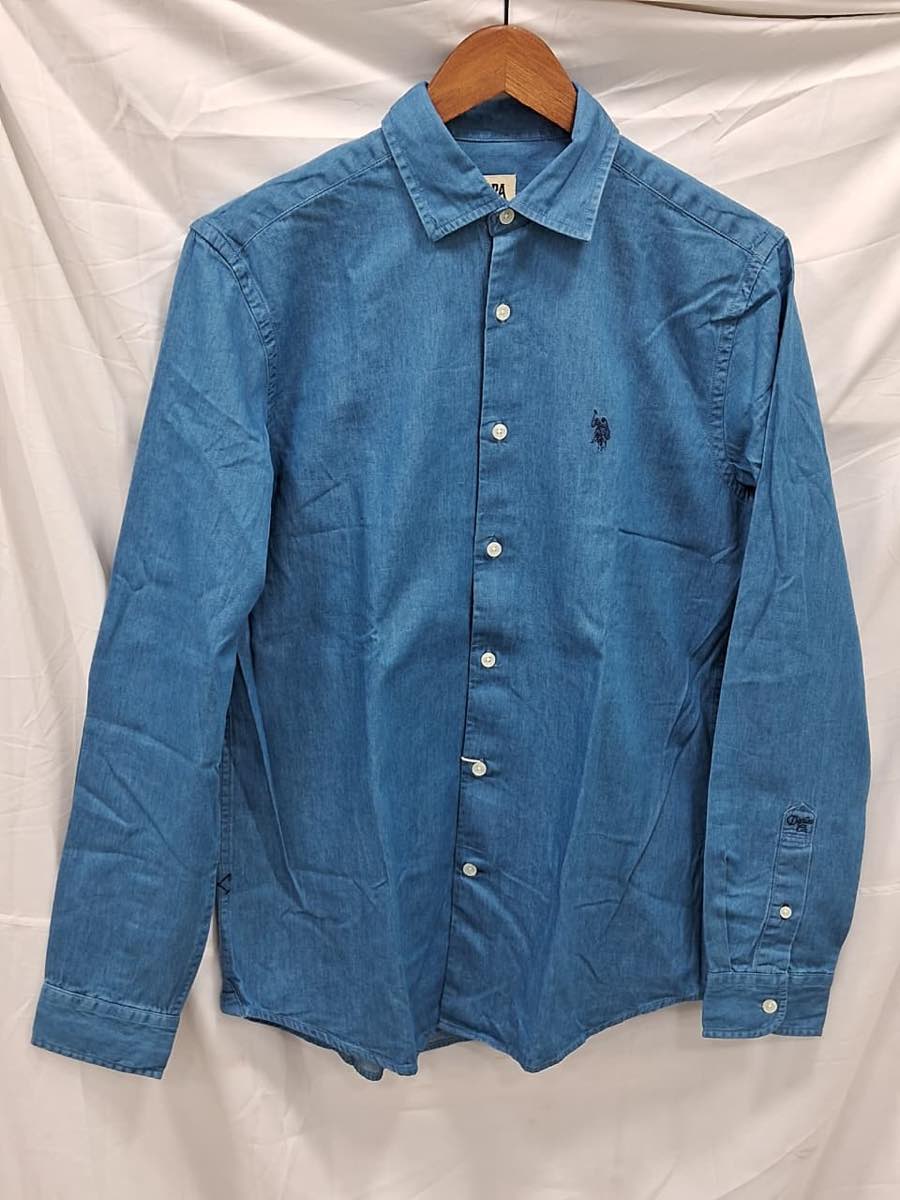
The shirt most people picture when they hear the words "office shirt": moderate in every proportion, quiet in colour and built to sit comfortably under a tie and jacket.
- Appearance
- Traditional proportions: a point or semi-spread collar with enough height to stand under a jacket, a straight or gently shaped body, single-button barrel cuffs and a full front placket. Nothing is exaggerated — collar, cuff and pattern all sit at a moderate scale.
- Character
- Reassuring rather than fashionable. A classic shirt is meant to settle into a well-assembled outfit and let the wearer, and the tie, take the attention.
- Settings
- Boardrooms, banking, legal and institutional offices, interviews and formal presentations — and any day when the dress code is unknown and the safest answer is the right one.
- Colours
- White, light blue, pale pink, ecru and soft lilac, plus fine micro-checks and hairline stripes in the same quiet palette.
- Trousers
- Charcoal, mid-grey and navy are the natural partners; black for evening; beige or stone for a lighter warm-weather version. A flat front or single pleat keeps the line clean.
- Tie & jacket
- Built for both. The collar suits a four-in-hand or half-Windsor knot, and a navy or charcoal jacket completes the register. Without a tie, open only the top button.
Styling considerations
Classic does not mean roomy. When the shoulder seam meets the edge of the shoulder and the cuff lands at the wrist bone, a classic shirt looks considered rather than dated. Keep the collar crisp — a soft, curling collar undoes the whole effect. See classic fit and the formal shirt collar styles.
IDX.CON — Family A / Character
Contemporary formal shirts
Cleaner lines, shorter collar points and colour or surface interest that a classic shirt would avoid. Designed to look intentional with the collar open as well as closed.
- A1Appearance
- Slightly trimmer cut, spread or cutaway collars, concealed or contrast details, and surface interest — tonal embroidery, textured weaves, unusual buttons — kept within a formal frame.
- A2Character
- Current and self-assured. It works with or without a tie and tends to carry more personality than the rest of the outfit.
- A3Settings
- Creative, tech and media workplaces, hospitality, start-ups, client dinners, after-work events and business-casual offices where a jacket is optional.
- A4Colours
- Deep teal, bottle green, slate, taupe, charcoal, dusty pink, lavender and black, often with tonal pattern or small embroidered motifs.
- A5Trousers
- Slim, tapered trousers in charcoal, navy, olive or stone; dark tailored chinos for the relaxed end. Black trousers sharpen deep shirts such as teal.
- A6Tie & jacket
- A knitted or slim silk tie with a spread collar — or no tie, with an unstructured blazer or a soft overshirt-style jacket.
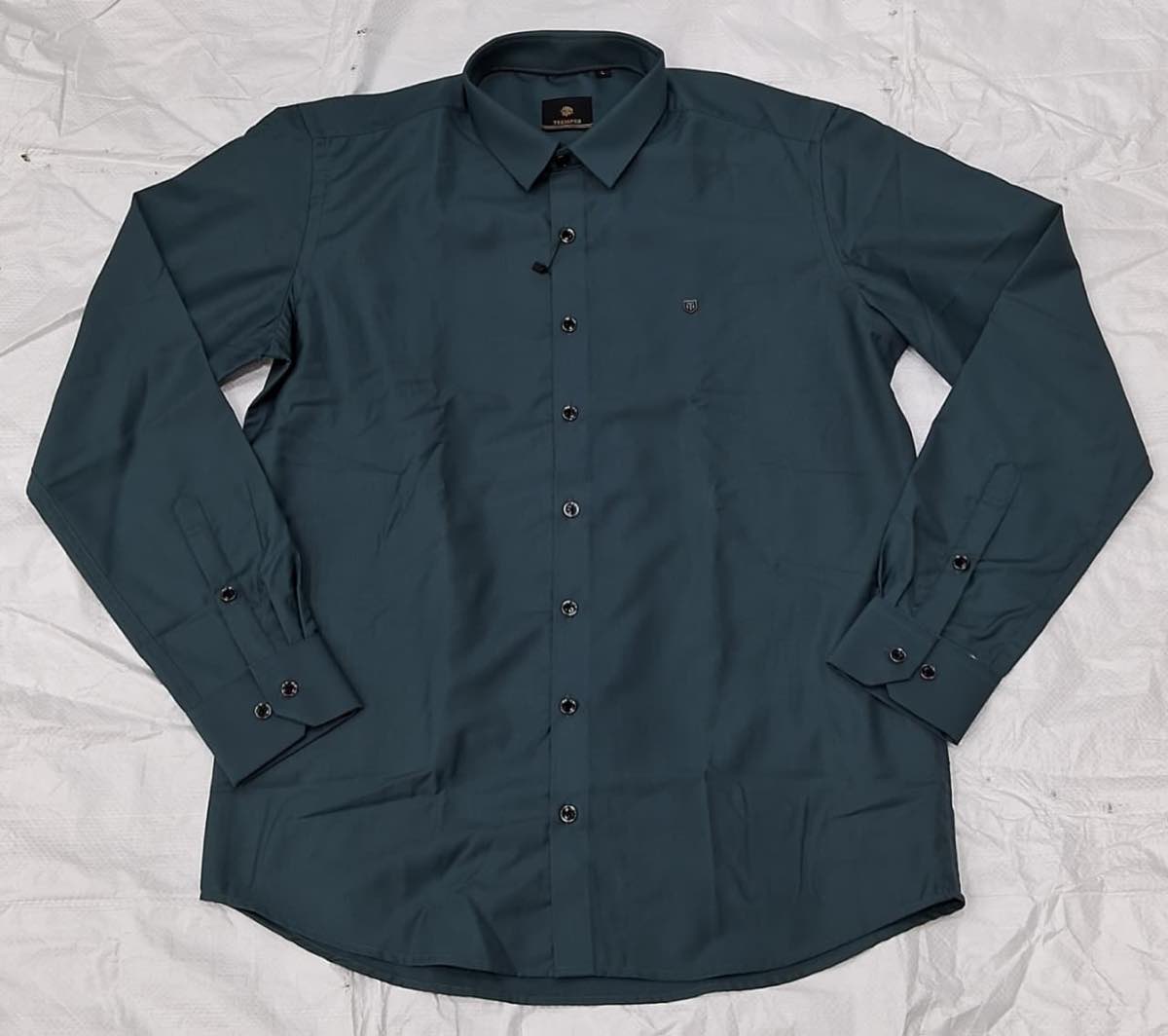
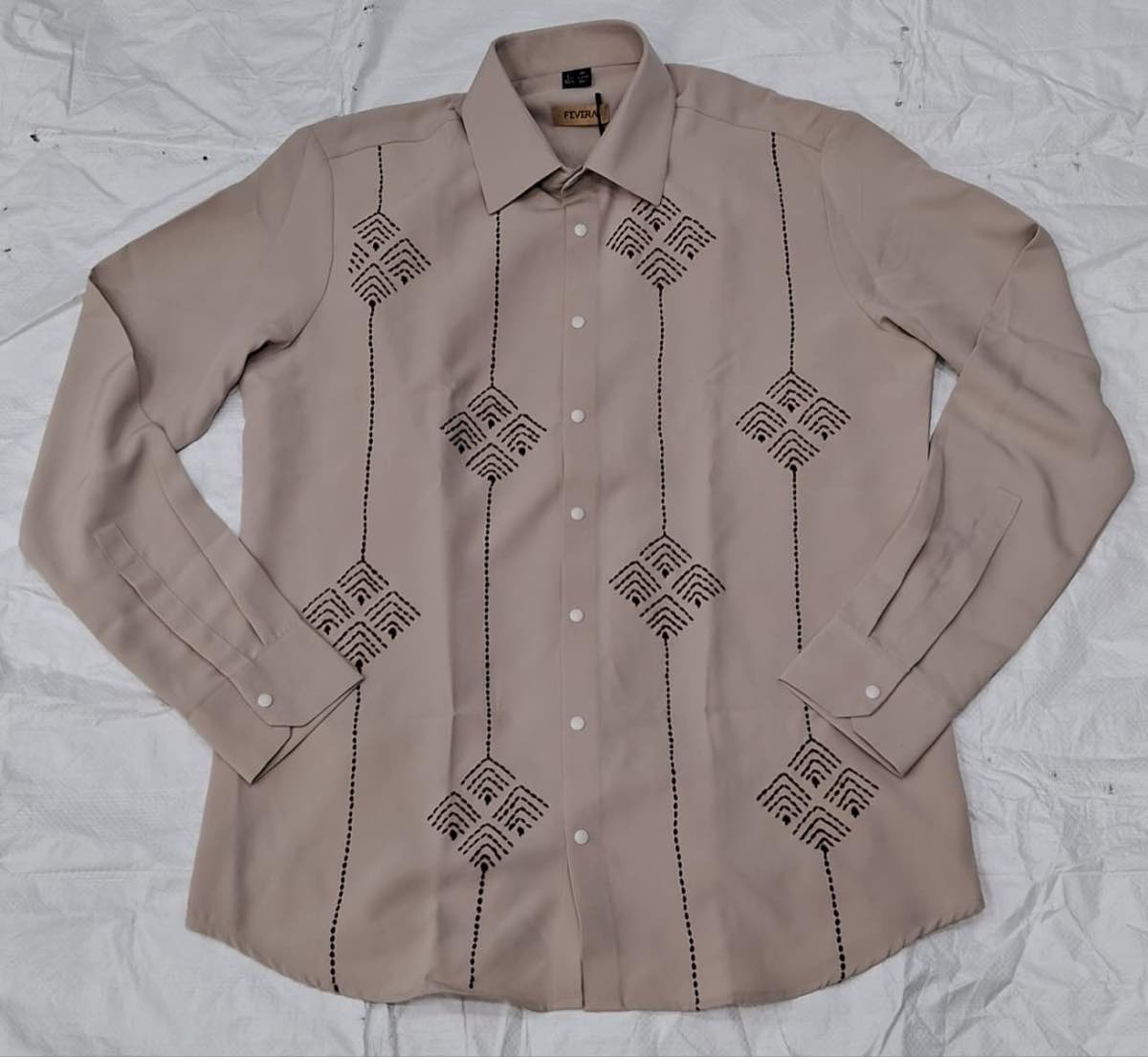
Let one element lead. A strongly coloured or embroidered shirt wants a plain jacket, a plain trouser and simple shoes. Check that the collar holds its shape when open — that is how it will usually be worn.
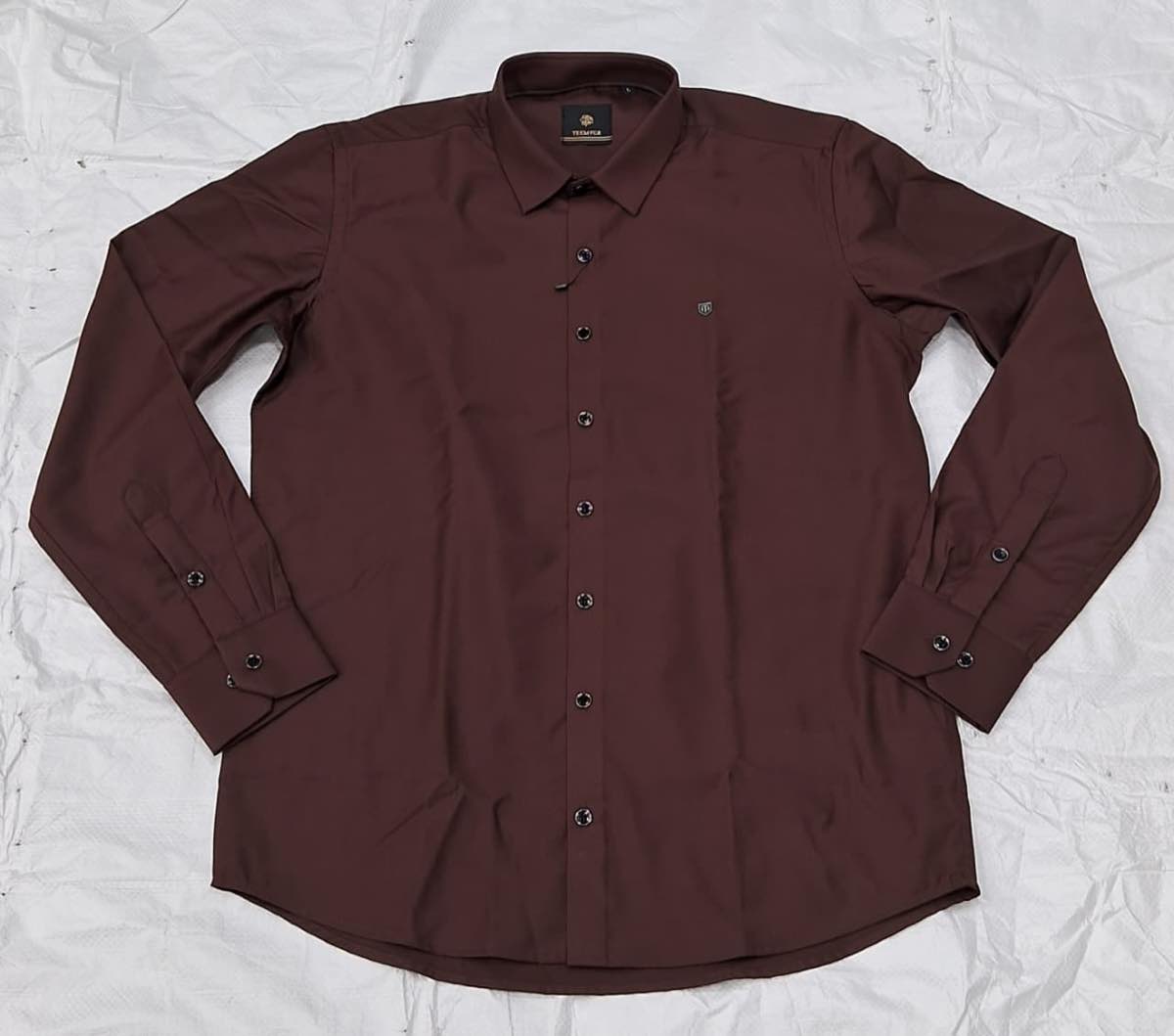
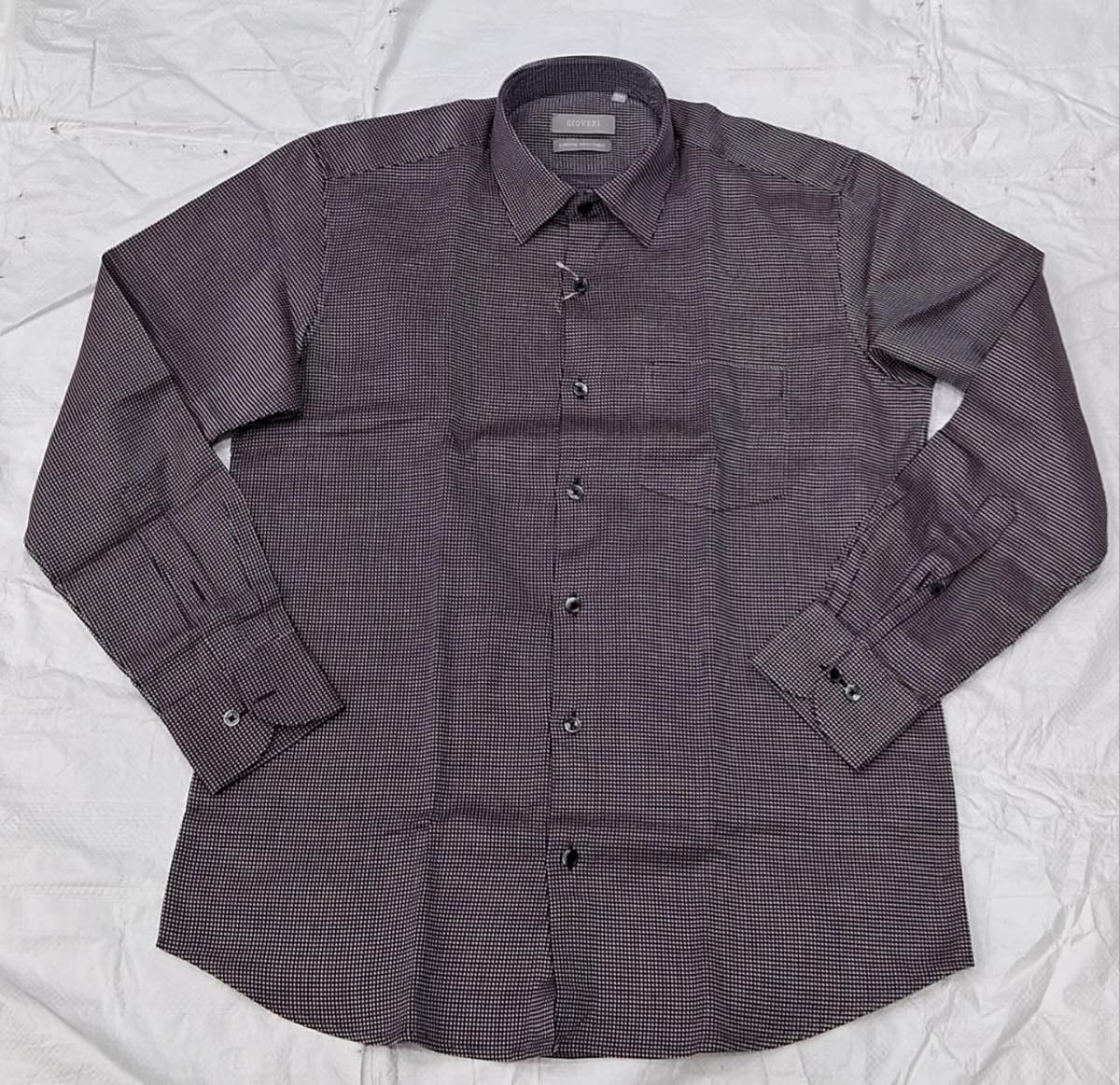
Slim fit formal shirts
FIT.SLM — Family B / Cut
Cut close through the chest and waist with narrower sleeves, often with back darts to remove excess cloth. The result is a tapered line from shoulder to hem — sharp, modern and precise.
- Appearance
- Close chest and waist, narrower sleeve, armholes set a little higher; falls in a clean taper rather than straight.
- Character
- Tailored and minimal. Suits a clean, pared-back outfit with few accessories.
- Settings
- Modern offices, client-facing roles, presentations, evening events, and under a slim suit where extra cloth would bunch.
- Colours
- Any, but deep solids — maroon, wine, plum, navy — look especially sleek. Micro-checks keep it formal.
- Trousers
- Slim or tapered, in charcoal, navy, black or grey. A slim shirt above a wide trouser looks top-heavy.
- Tie & jacket
- Narrower ties and slimmer lapels; a structured, close jacket under which the trim body sits without billowing.
- Styling considerations
- Slim is not tight. Buttons should lie flat with no X-shaped creases across the chest, and you should be able to reach forward without strain. If the cloth has no stretch, allow a little more ease. Compare the two cuts in Slim Fit vs Regular Fit Shirts and the full slim fit study.
FIT.REG — Family B / Cut
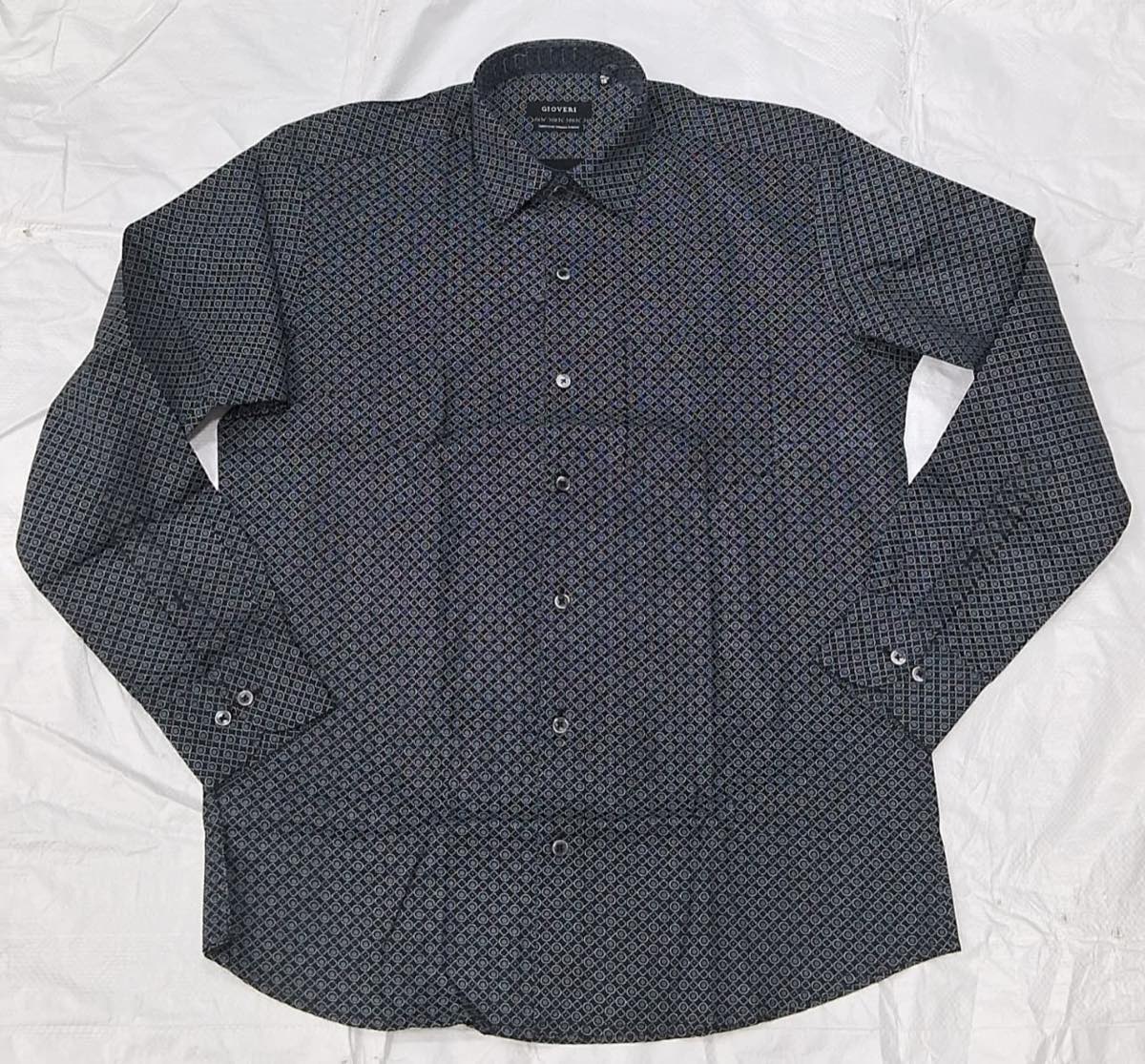
Regular fit formal shirts
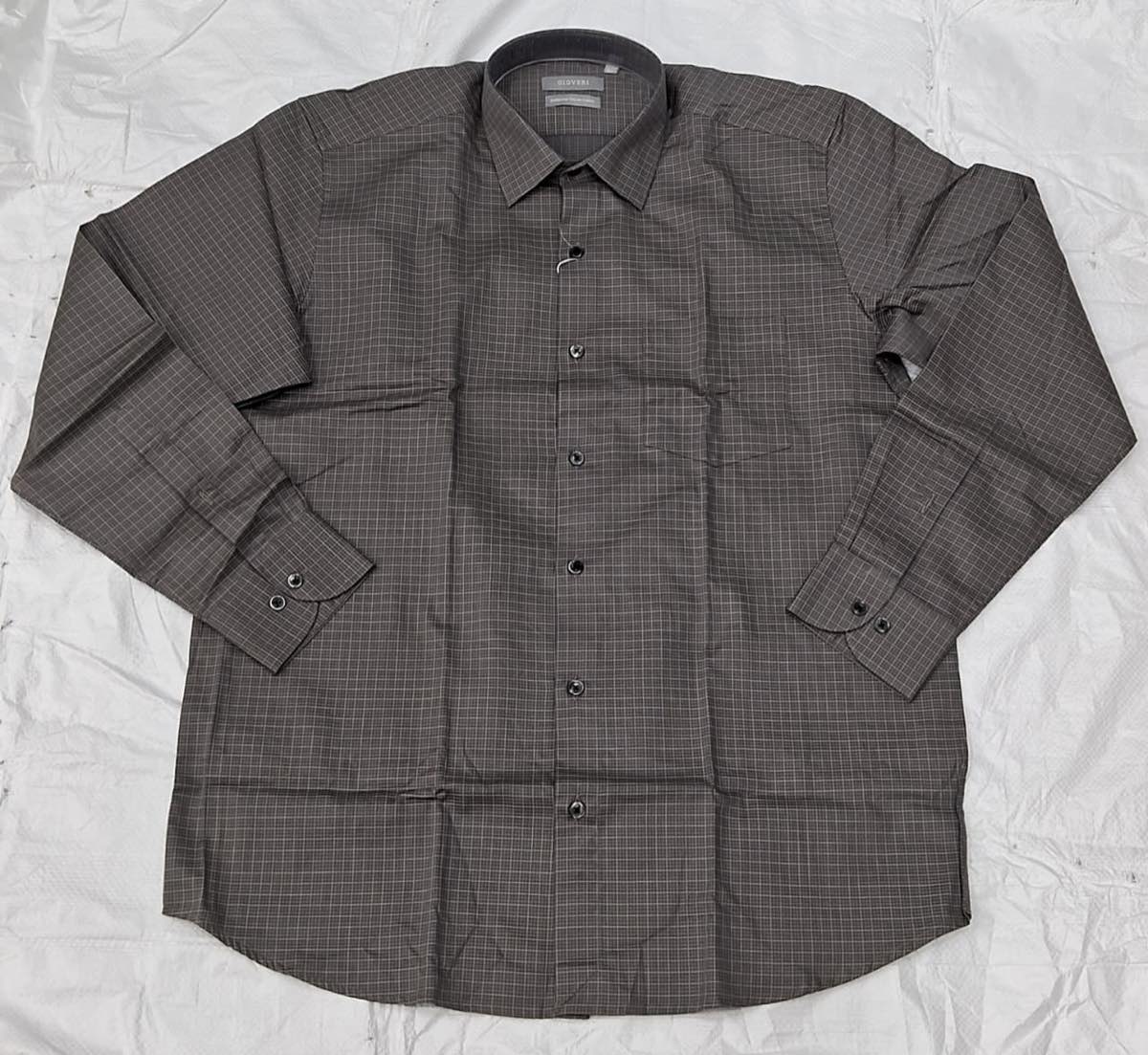
A straight, balanced body with comfortable ease through the chest and waist. The everyday standard for men's corporate shirts — neat when tucked, easy through a long working day.
- Appearance
- Standard armholes and sleeve width; the body falls straight from the chest rather than tapering, with room to move without the cloth pulling.
- Character
- Dependable and unfussy. It suits most builds and asks nothing of the wearer.
- Settings
- Daily office wear, long commutes, travel days, and work that involves reaching, carrying and sitting for hours.
- Colours
- Everything — and especially practical in muted mid-tones: charcoal, grey, taupe, light blue, with micro-dots and micro-checks that hide the creases of a long day.
- Trousers
- Straight or regular-cut trousers in navy, grey, charcoal, black or khaki. A single pleat balances the extra ease well.
- Tie & jacket
- Comfortable under most jackets and with any standard tie width; a regular-cut jacket matches its proportions.
Styling considerations
Regular should be tidy, not baggy. When tucked, the waist should not balloon over the trousers, and the shoulder seam should still sit at the edge of the shoulder. See the regular fit study and How to Choose the Right Formal Shirt Fit.
PAT.SOL — Family C / Surface
Solid colour shirts
One colour throughout, with interest only in the weave. The canvas on which ties, jackets and accessories do the talking — and the easiest shirt in any wardrobe to coordinate.
- C1Appearance
- A single colour in a smooth poplin, soft twill, fine oxford or linen-look texture. The weave is the only pattern.
- C2Character
- Pure, calm and versatile. It takes on the formality of whatever is worn with it.
- C3Settings
- Interviews to weekend lunches, depending on colour: pale solids for formal settings, richer and brighter solids for smart-casual.
- C4Colours
- White, light blue, pink and grey form the foundation; sage, green, teal, lavender and earth tones extend it.
- C5Trousers
- Contrast in depth reads crisp: a light shirt over a darker trouser. Sage with navy, charcoal or stone; bright green with navy or white.
- C6Tie & jacket
- Patterned ties — stripes, small dots, textured knits — and patterned jackets sit easily on a solid. Solid on solid needs a contrast of tone or texture.
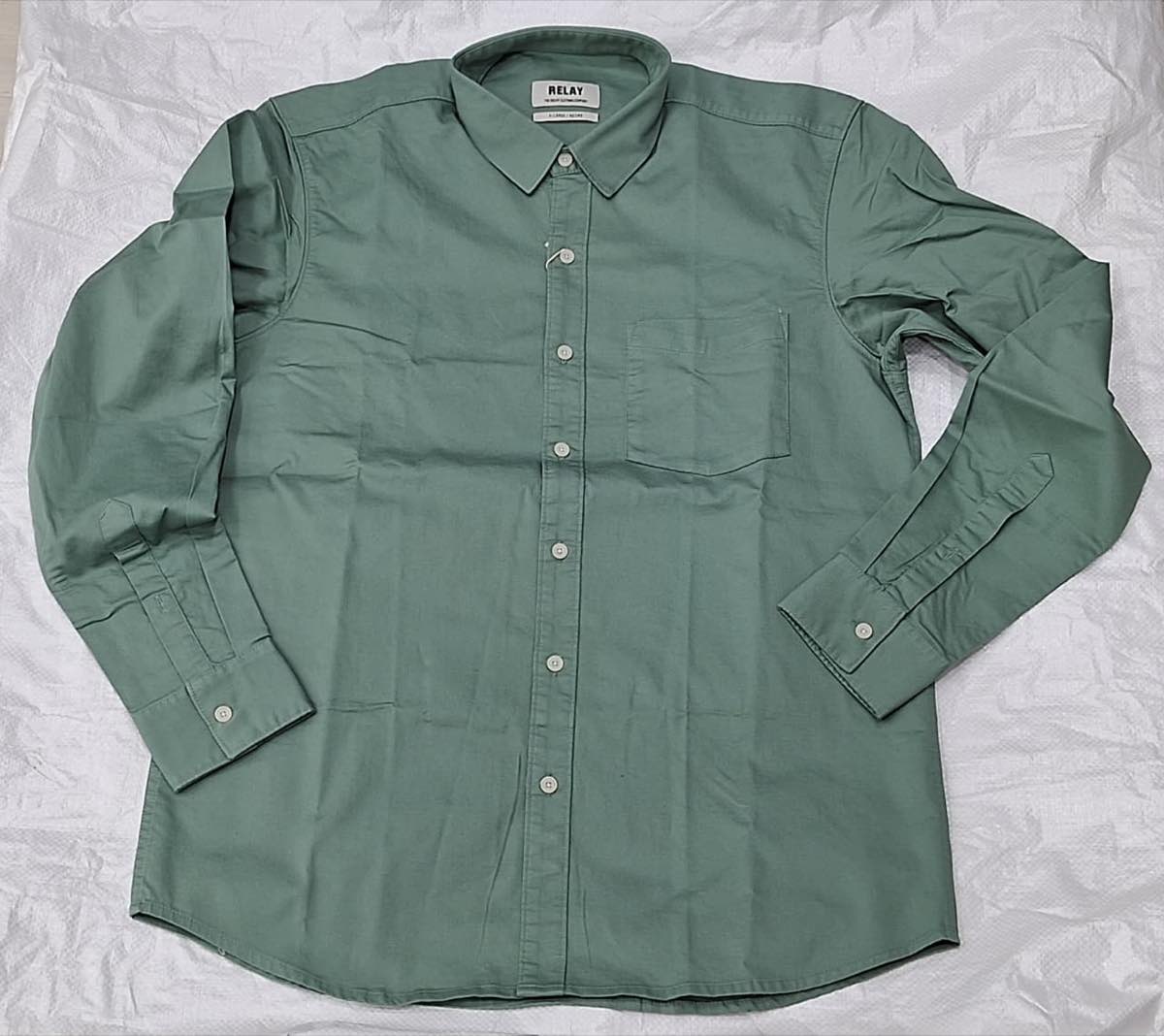
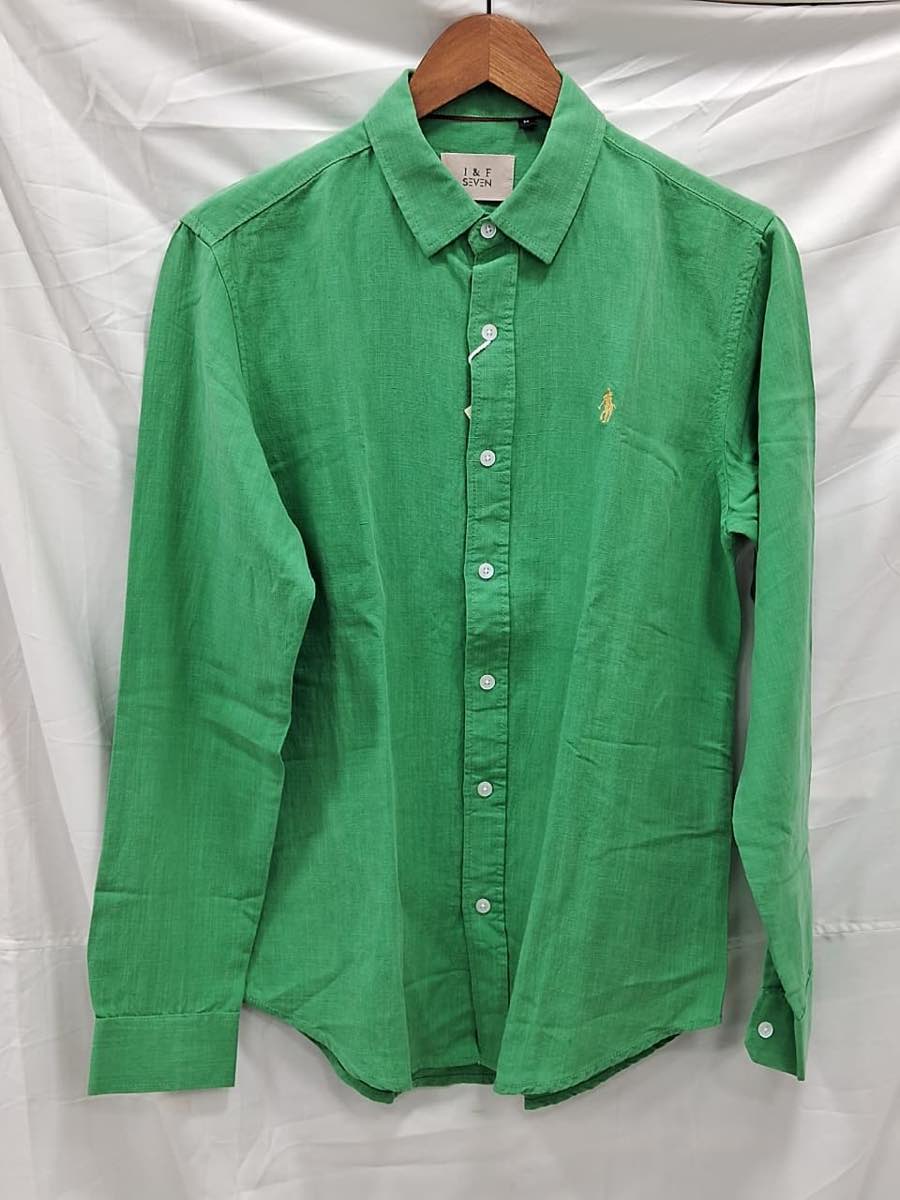
With no pattern to hide behind, fit and fabric show. Keep solids well pressed, and wear the brighter colours in smaller doses and more relaxed settings.
Striped formal shirts
PAT.STR — Family C / Surface
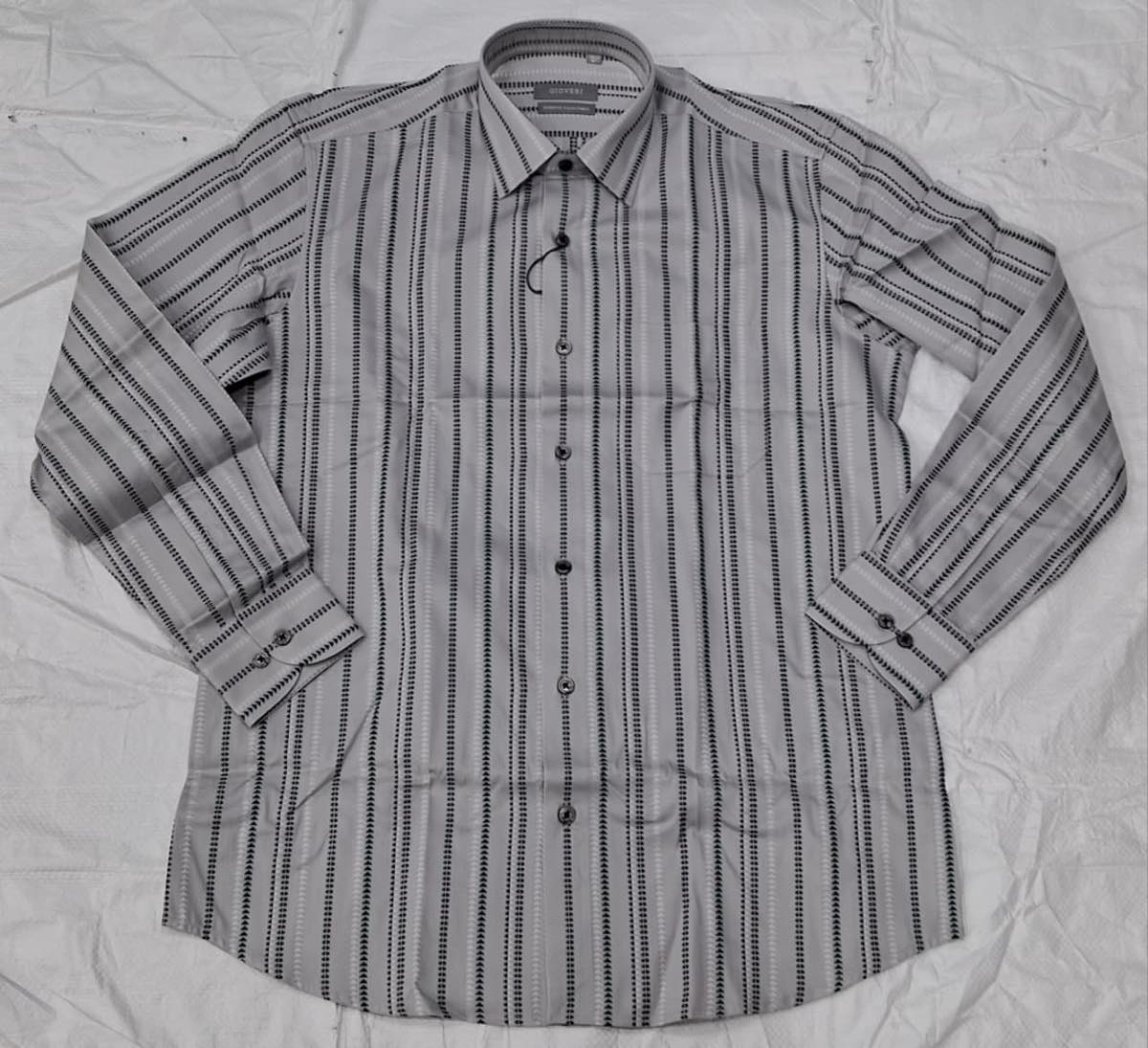
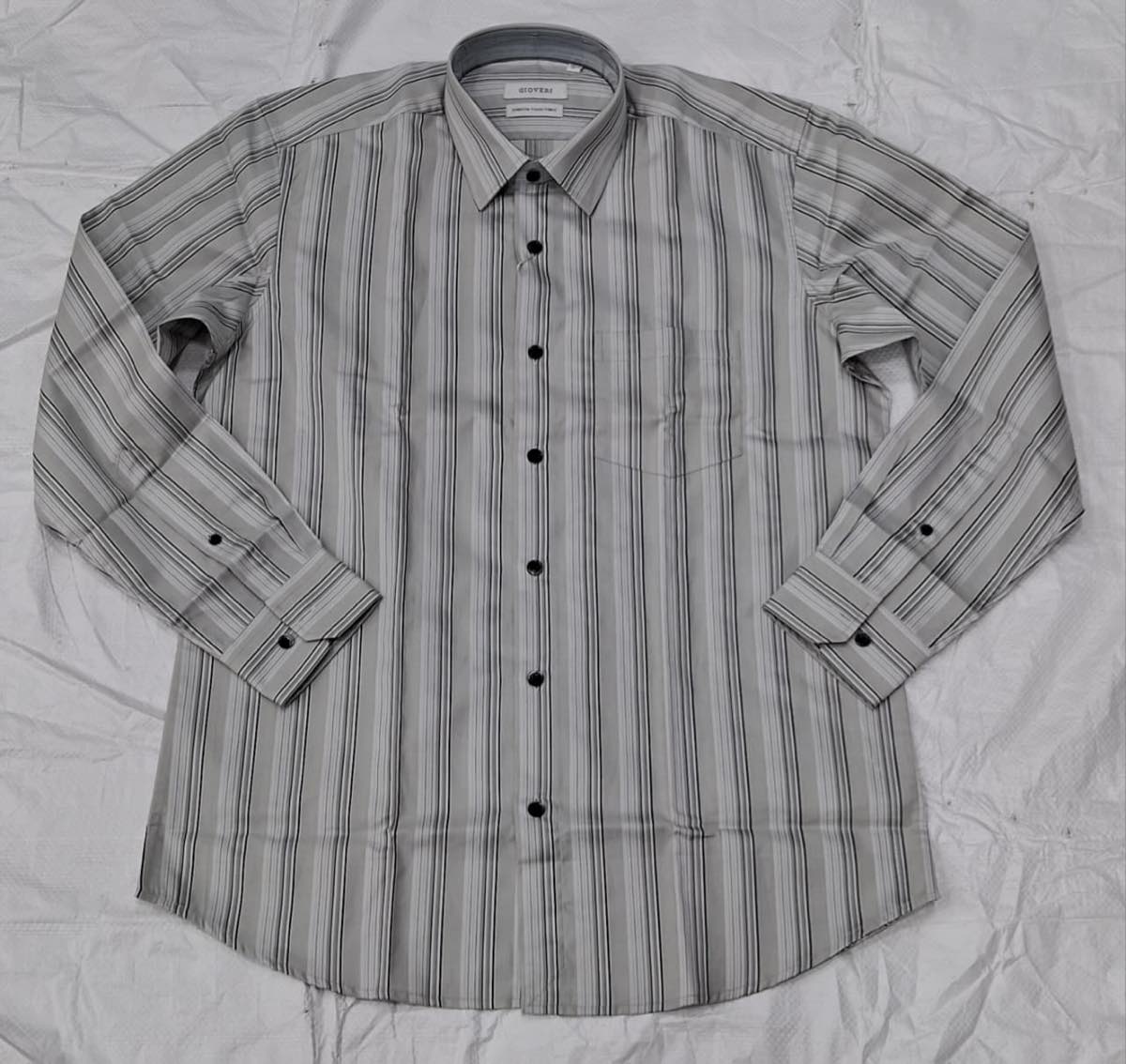
Vertical lines of varying width and spacing. A stripe adds direction and length to the torso; the finer and lower in contrast it is, the more formal the shirt becomes.
- Appearance
- Hairline and pinstripes, pencil stripes, bold even Bengal stripes, and multi-stripes that mix widths and tones.
- Character
- Purposeful and energetic — businesslike in fine versions, spirited in bold ones.
- Settings
- Fine stripes for meetings and corporate offices; bolder and multi-stripes for creative offices and smart-casual Fridays.
- Colours
- Blue, grey, navy, black or burgundy on white; tonal stripes such as grey on grey.
- Trousers
- Pick up one of the stripe colours, or go a neutral shade darker: grey stripes with charcoal or black, blue stripes with navy or grey.
- Tie & jacket
- Avoid matching scales. Choose a solid, small-dot or textured tie, or a stripe of clearly different width, under a plain jacket.
- Styling considerations
- Stripes reveal fit: they should run straight and parallel. A bow at the waist or a kink across the chest means the shirt is pulling. Look too at how neatly the stripes meet at the placket and pocket. More in Striped vs Checked Formal Shirts and Colours & Patterns.
PAT.CHK — Family C / Surface
Checked shirts
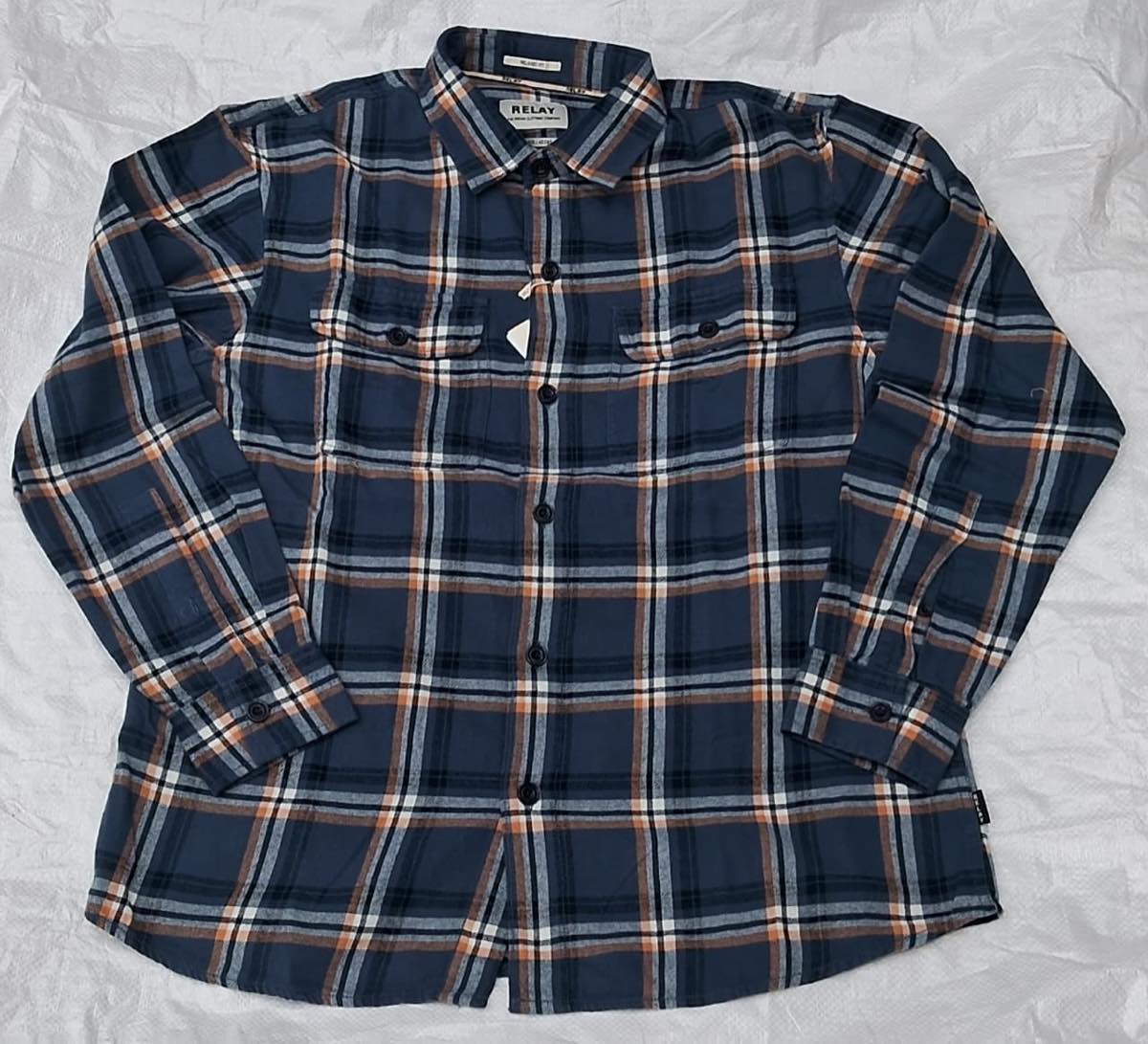
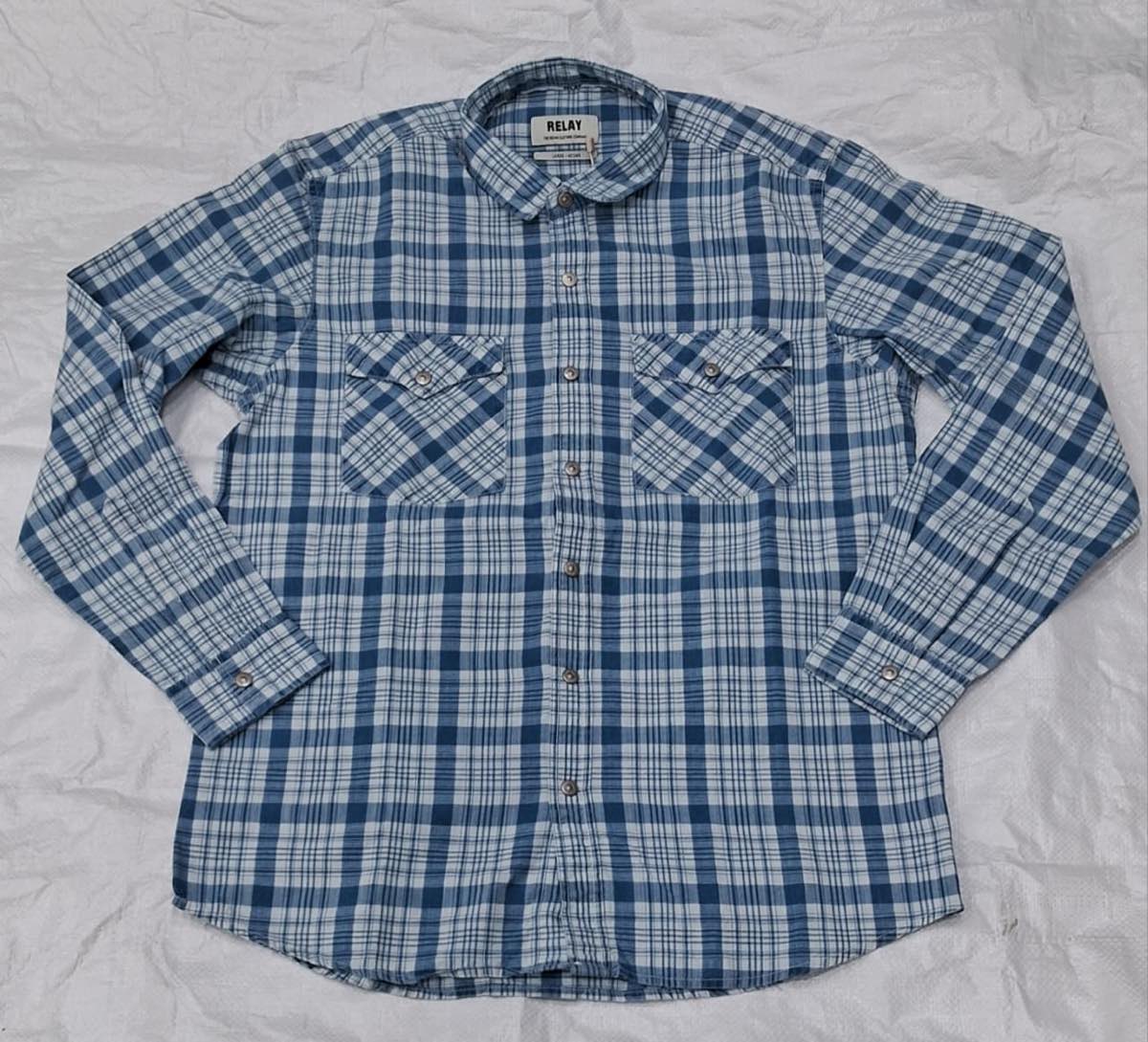
Horizontal and vertical lines crossing — from a gingham that reads almost solid at a distance to a multi-colour plaid that reads weekend. Structured, approachable and slightly relaxed.
- Appearance
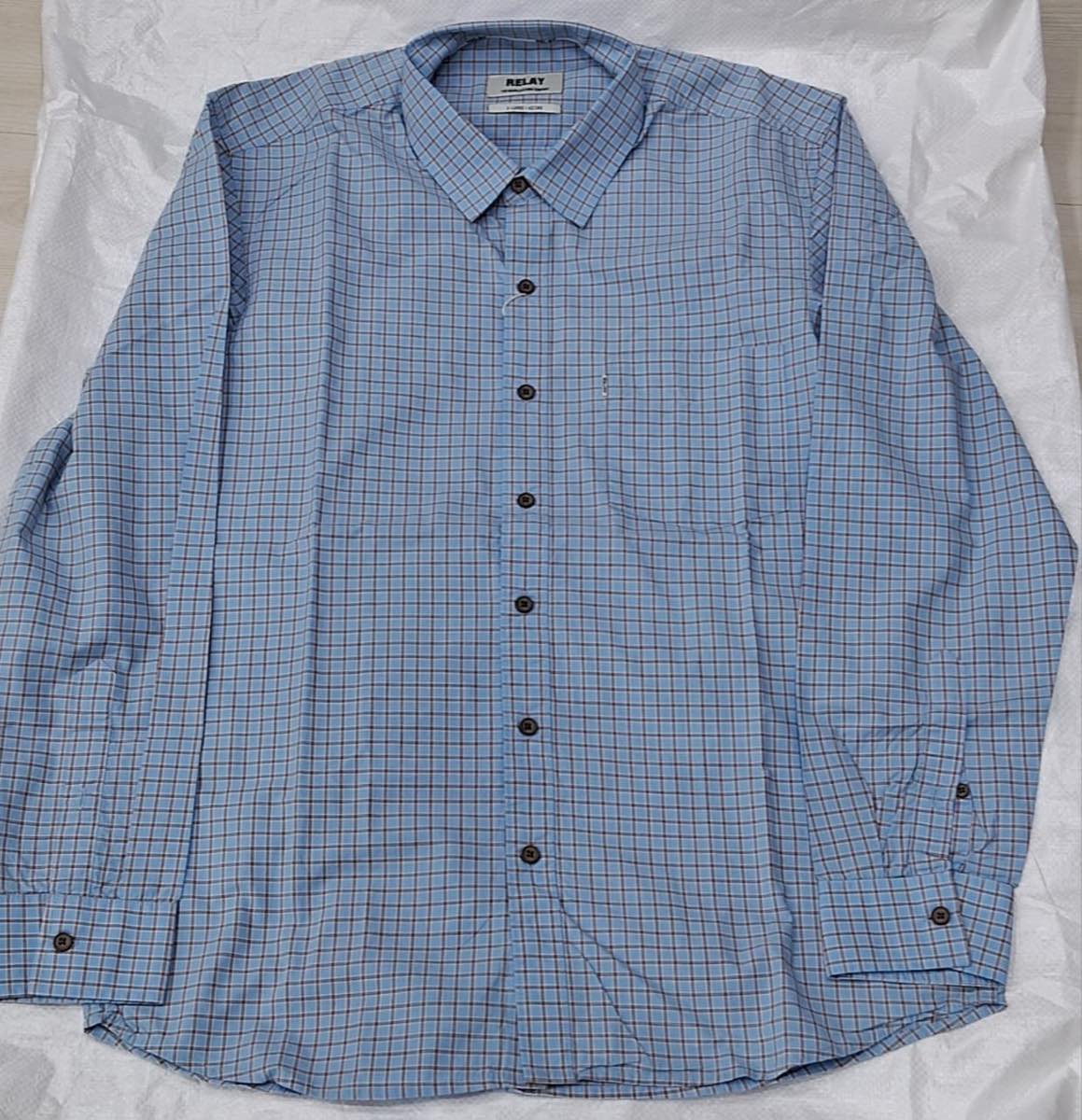
- Gingham, fine and micro checks, tattersall, windowpane and larger multi-colour plaids. Flap or twin chest pockets, as on both shirts here, move a check firmly towards casual.
- Character
- Friendly and orderly. Small checks feel businesslike; large, multi-coloured checks feel relaxed.
- Settings
- Fine checks for the everyday office and client visits; bold plaids and twin-pocket styles for casual Fridays, travel, off-site days and weekends.
- Colours
- Blue and white, navy and cream, grey and white; accent lines in rust, orange or green in larger plaids.
- Trousers
- Pick out the base colour or stay neutral: a navy plaid with stone chinos or grey; a blue check with navy or khaki. Dark denim suits the twin-pocket styles.
- Tie & jacket
- Fine checks take a solid knitted or silk tie. Large plaids are best without a tie, perhaps under an unstructured jacket.
Styling considerations
Keep everything around a check plain, and never pair it with another check of similar scale. For strictly formal occasions, reserve checks for the smallest, lowest-contrast versions. See common styling mistakes.
PAT.MIN — Family C / Surface
Minimal pattern shirts
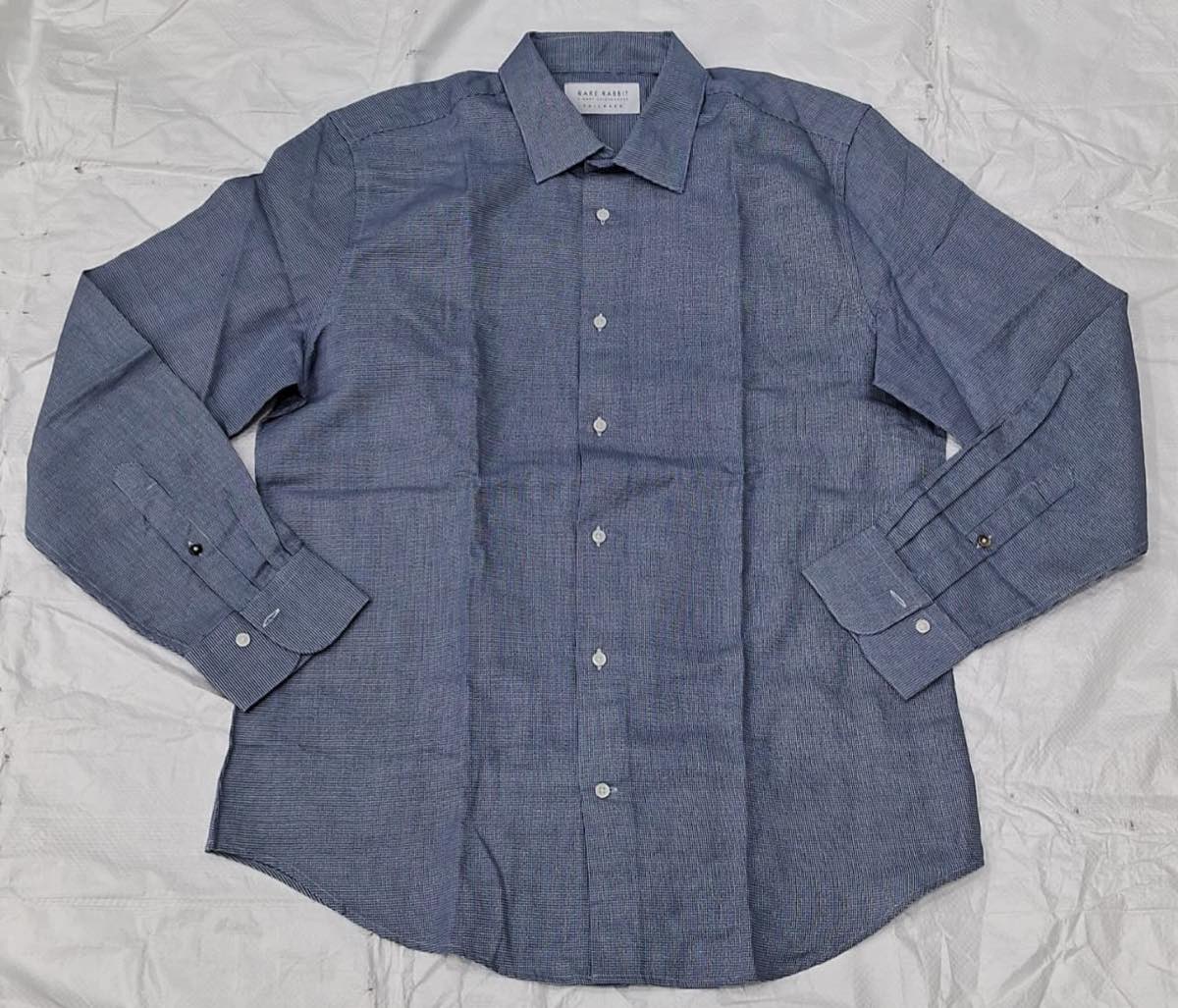
Tiny repeated motifs — small enough to read as texture from across the room and as pattern only up close. Personality, without asking for attention.
- C1Appearance
- Micro-florals, micro-geometrics, pin dots and dobby weaves, usually a lighter motif on a deeper ground.
- C2Character
- Quietly individual. The detail rewards a closer look without disturbing a formal outfit.
- C3Settings
- Business-casual offices, creative and client-facing work, lunches and evening events; the smallest, most tonal versions pass in conservative offices.
- C4Colours
- Blue, navy, mauve, wine, charcoal and grey, with white or pale motifs.
- C5Trousers
- Solid trousers only, a deeper tone of the shirt: blue micro-floral with navy or grey; mauve with charcoal or stone.
- C6Tie & jacket
- Often worn without a tie. If wearing one, keep it solid and textured, under a plain navy or grey blazer.
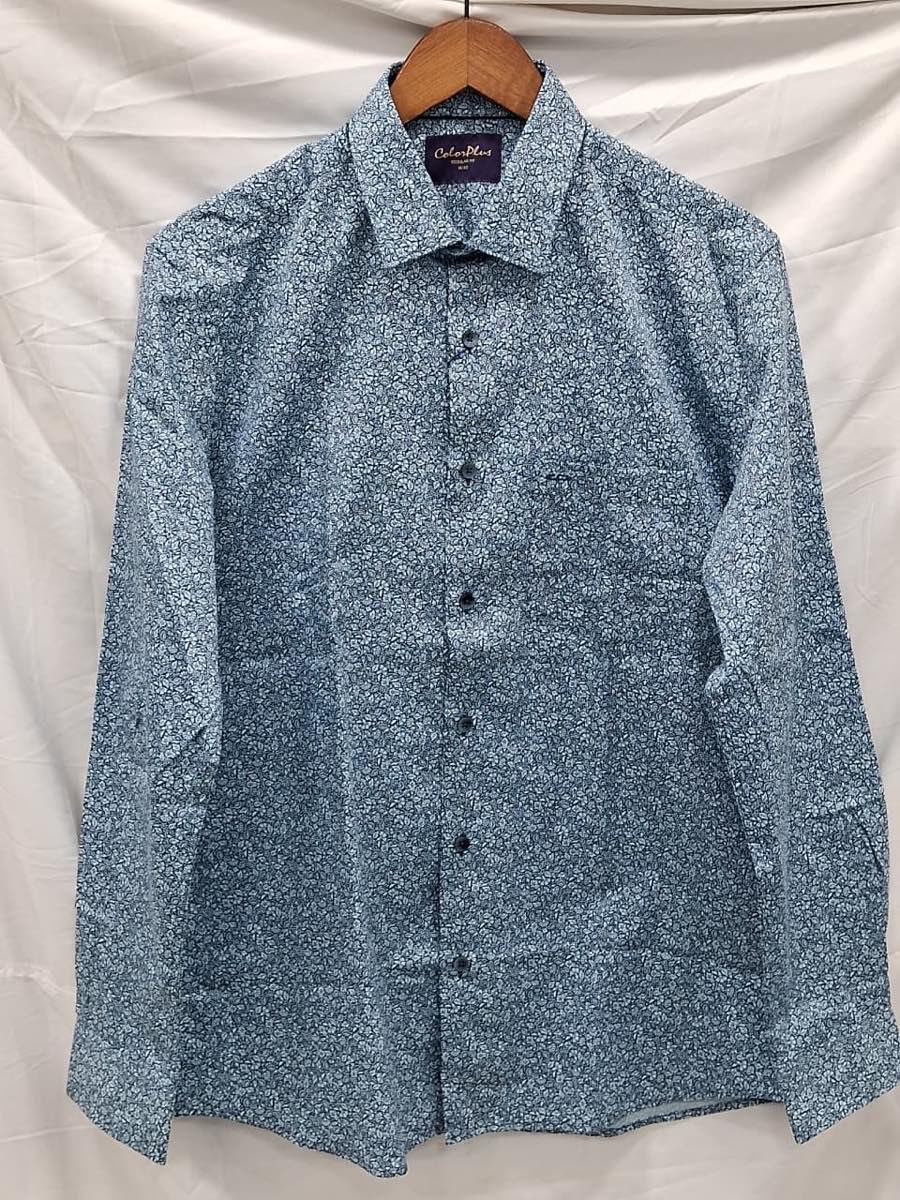
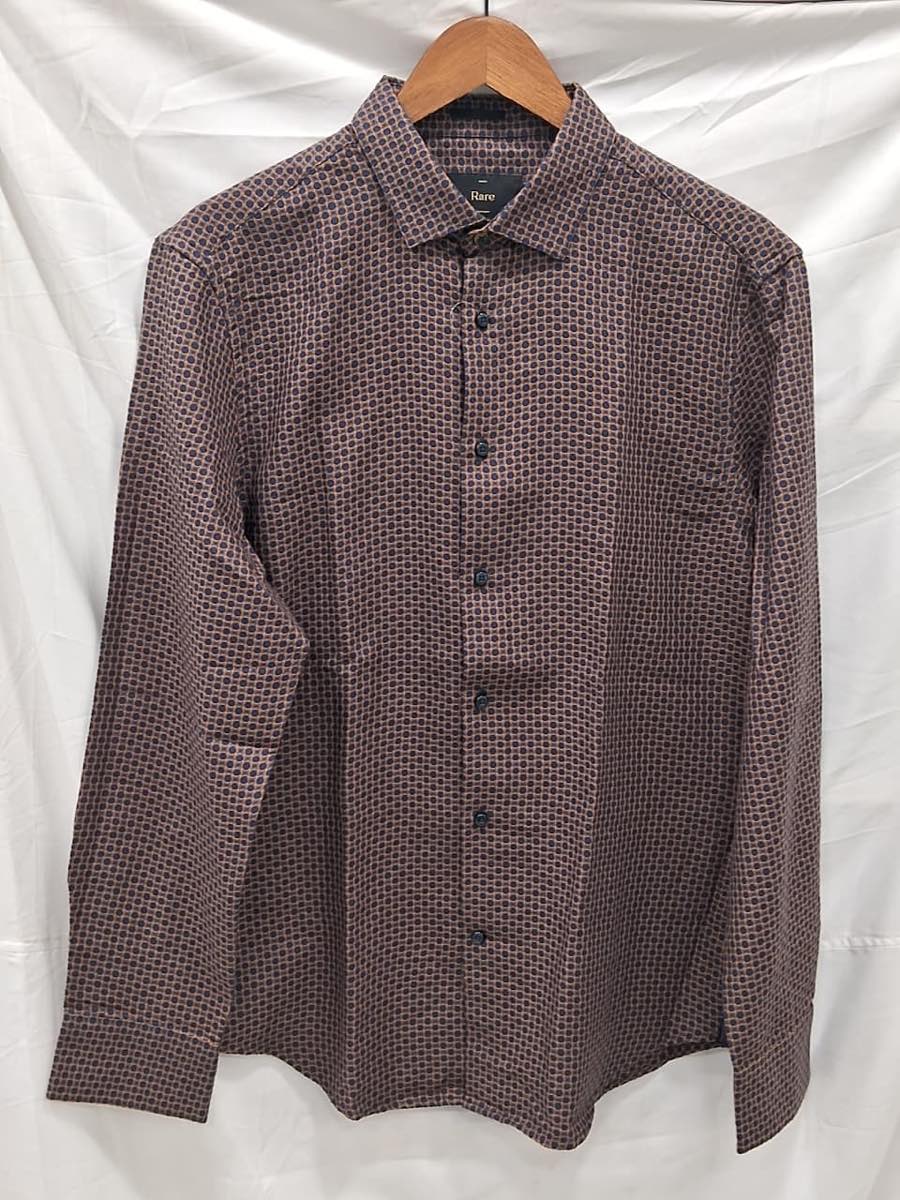
Step back a few paces. If the pattern reads as an even tone, the shirt is office-ready; if it reads as a print, treat it as smart-casual.
White formal shirts
CLR.WHT — Family D / Colour
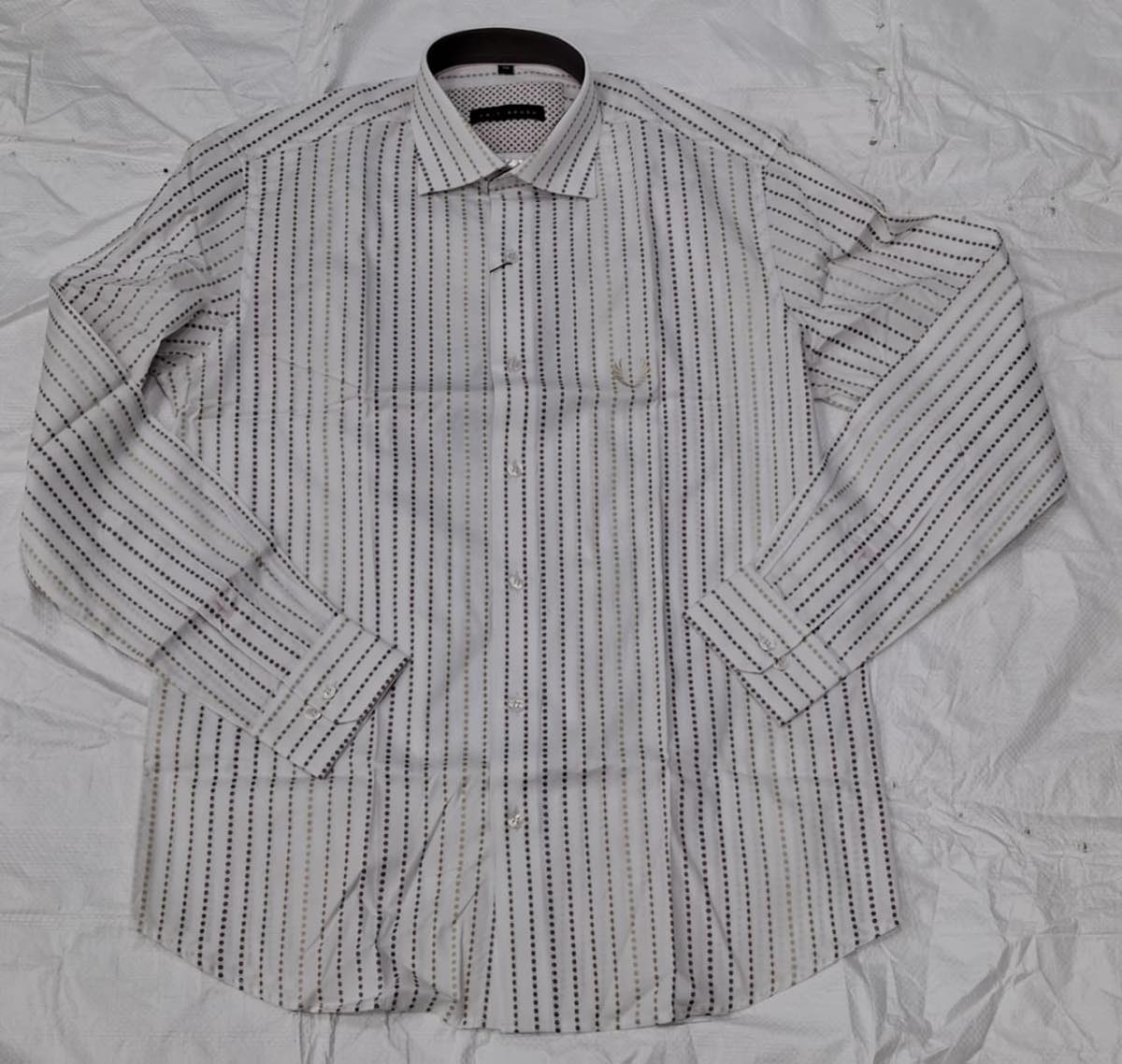
The foundation of men's formal dressing: clean, crisp and appropriate almost everywhere. If a wardrobe holds only one shirt, it is this one.
- Bright white
- Soft white
- Ecru
- White, fine stripe
- Appearance
- Pure or near-white in poplin, twill, oxford or textured weaves — including faint tonal patterns and fine stripes that still read as white.
- Character
- Crisp, neutral and quietly authoritative. It brightens the face and sharpens everything around it.
- Settings
- All of them: interviews, ceremonies and weddings, boardrooms and the everyday office.
- Colours
- Bright white, soft white, ivory and ecru; white grounds with fine grey, blue or black stripes.
- Trousers
- Every colour works — navy, charcoal, black, grey, beige, olive.
- Tie & jacket
- Any tie and any jacket. The best canvas for a patterned tie or a strongly coloured suit.
- Styling considerations
- White shows wear first, at the collar and cuffs. Keep several in rotation, wash promptly, and choose a slightly denser weave if you prefer less transparency. Read White Shirts: A Foundation of Men's Formal Dressing and the white shirt colour notes.
CLR.BLU — Family D / Colour
Blue formal shirts
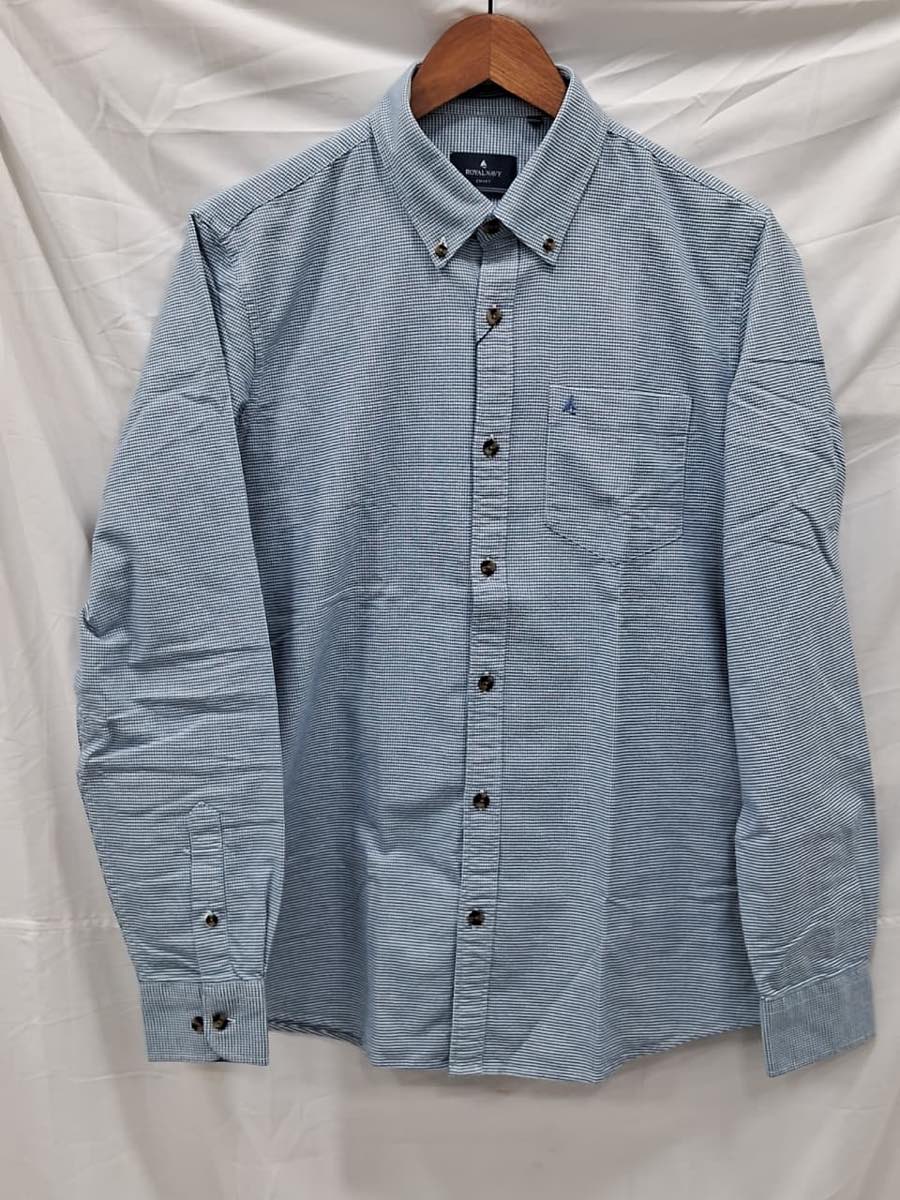
Friendlier than white, more forgiving through the day, and arguably the most worn office shirt colour of all. From palest sky to mid-blue chambray.
- Sky
- Powder
- Cornflower
- French blue
- Chambray
- Appearance
- Solids, micro-checks, stripes and textured weaves in every depth of blue, with point, spread or button-down collars.
- Character
- Calm, approachable and dependable — a colour that suits most complexions and most rooms.
- Settings
- The everyday office, meetings, travel and client lunches. Button-down versions lean business-casual.
- Colours
- Sky, powder, cornflower, French blue, chambray and steel.
- Trousers
- Navy, charcoal, grey, khaki, beige and stone. Navy on navy works only when the depths are clearly different.
- Tie & jacket
- Navy, burgundy, brown or knitted ties; navy, grey or brown jackets. A button-down is usually tie-optional.
Styling considerations
Match the depth of blue to the occasion: paler and finer for formal settings, deeper and more textured for relaxed ones. Read Blue Formal Shirts and Their Styling Possibilities and the light blue colour notes.
See also — cross-references
Read the index
further
- → FITShirt FitsSlim, regular, classic and contemporary — the architecture of a silhouette, with a fitting-problems guide.
- → CLR / PATColours & PatternsFormal shirt colour combinations and how stripes, checks and textures change formality.
- → WRDThe Business WardrobeTurning the ten entries into a men's professional wardrobe for a five-day week.
From the Style Journal
- 01How to Choose the Right Formal Shirt Fit
- 02White Shirts: A Foundation of Men's Formal Dressing
- 03Blue Formal Shirts and Their Styling Possibilities
- 04Slim Fit vs Regular Fit Shirts
- 09Striped vs Checked Formal Shirts
- 10How to Build a Versatile Office Shirt Wardrobe
- 13Choosing Shirt Colours for Professional Dressing
See the index
in cloth.
Categories are easier to judge in the hand than on a screen. Visit Options Mall in Vile Parle West to try the cuts side by side, and ask the team about current styles in each family.
Vile Parle Shopping Centre — Above Sahakari Bhandar — V.M. Road, Juhu — Vile Parle West — Mumbai 400049