Choosing Shirt Colours for Professional Dressing
Colour is the first thing people notice about a shirt. Choose it with your complexion, your workplace and your other clothes in mind, and it quietly does its job every day.
Options Mall Menswear Journal — Mumbai
Shirt colour says a great deal before anyone notices the fit, the collar or the fabric. A crisp white shirt signals formality and attention to detail; a soft blue suggests calm reliability; a deeper colour adds personality and warmth. In professional dressing, the aim is not to find the most interesting colour but the most useful one: a shade that flatters your complexion, suits your working environment and combines easily with the trousers, jackets and ties you already own. This essay explains how to think about shirt colours for work, from the essential office palette to colours for different complexions and the right place for bolder hues.
The professional palette
A small group of colours forms the backbone of professional shirt wardrobes almost everywhere. They are popular not out of habit but because they work with the darker neutrals of business tailoring — navy, charcoal, grey and black.
White
The most formal shirt colour and the most adaptable. It pairs with every suit and tie and suits almost all complexions. Read more in white shirts as a foundation of formal dressing and the white shirt entry in our colour guide.
Light blue
Slightly softer than white and just as versatile. Light blue is often the most flattering colour for a wide range of skin tones and looks equally right with or without a jacket. See blue formal shirts and their styling possibilities.
Pale pink, lavender and soft grey
These are the natural second wave. Pale pink adds warmth to the face, lavender pairs beautifully with grey and navy, and soft grey offers a quiet, modern alternative to white. All three remain entirely professional when the shade is gentle.
Colour and complexion
The same shirt can make one man look bright and another look tired. The key factor is contrast between your skin, hair and eyes. Men with high natural contrast — darker hair against lighter skin, for example — tend to carry crisp white and stronger blues well. Men with lower natural contrast often look better in slightly softer shades such as ecru, light blue or muted lavender, which do not overpower the face.
Undertone matters too. Warmer complexions often suit cream, ecru, warmer blues and soft pinks; cooler complexions tend to suit pure white, cooler blues and lilac. Most medium and deeper Indian complexions look excellent in white, light blue, pale pink and lavender, which is one reason these colours are so popular for office wear in Mumbai.
Hold two shirts of different shades under your chin in natural daylight. The right colour makes your skin look clear and even; the wrong one emphasises shadows or makes the face look flat. Trust what you see rather than what you expect.
Colour and formality
Lighter, cooler and plainer colours read as more formal. As colours become darker, warmer or more saturated, they move towards smart-casual. That gives a simple ladder for professional dressing:
- Most formal: white, then pale blue.
- Business everyday: mid-blue, pale pink, lavender, soft grey, fine stripes.
- Relaxed office: stronger blues, small checks, ecru and cream.
- Off-duty: deep and saturated colours, bold prints and dark shirts.
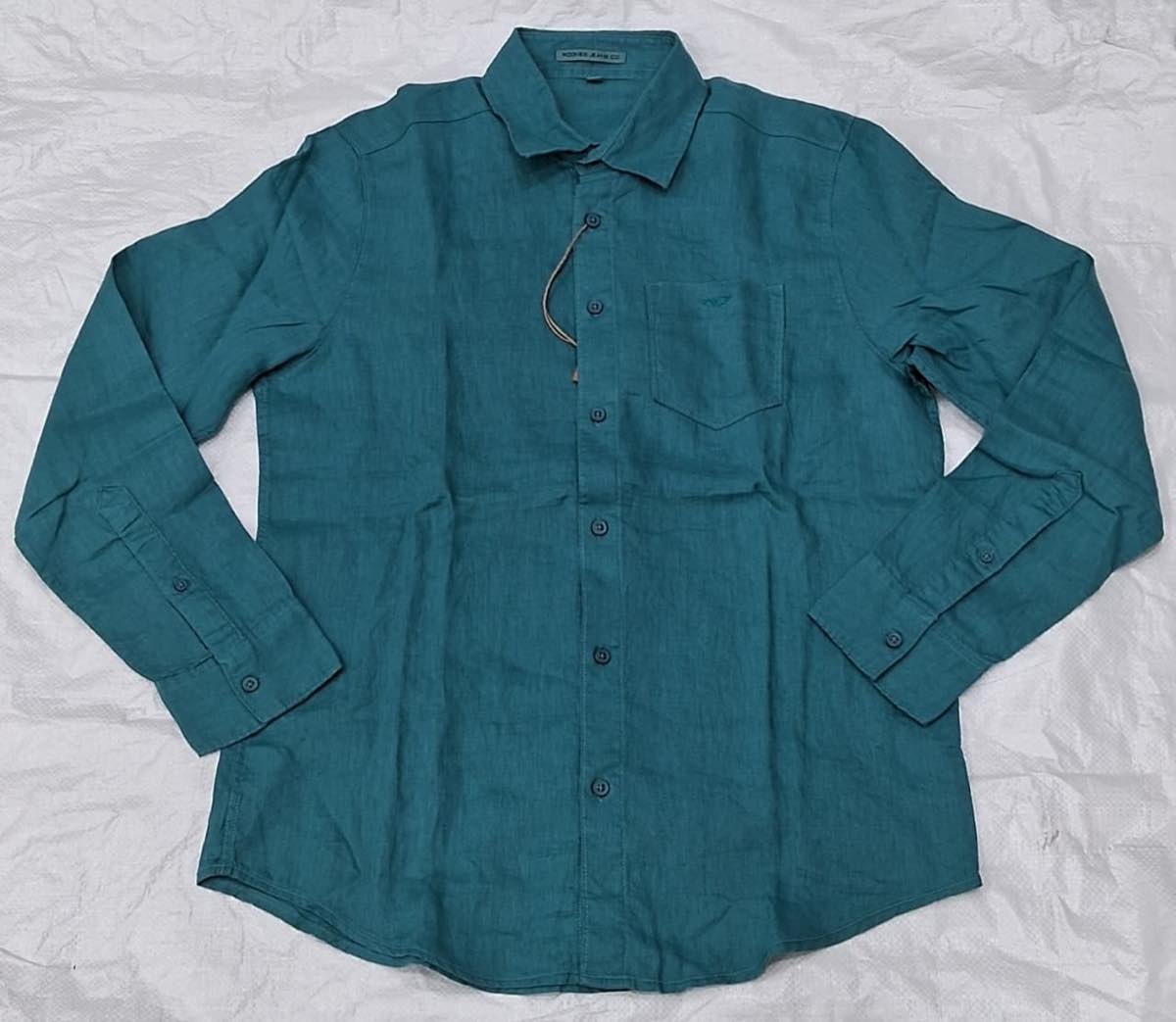
The cover shirt sits at the relaxed end of this ladder. Its rich teal and softly textured weave make it a handsome choice for weekends, travel and creative settings, worn with stone, white or navy trousers. For formal meetings, step up the ladder towards the lighter shades.
Choose the colour for the most formal moment of your day. You can always relax a light shirt; it is much harder to dress up a dark one.
Formal shirt colour combinations
A shirt is only half of an outfit, so colour choice should always consider what it will sit beside. These formal shirt colour combinations are dependable foundations:
- White shirt + navy suit + burgundy tie — classic, confident and suitable for any formal occasion.
- Light blue shirt + charcoal trousers + navy tie — polished and calm, ideal for client meetings.
- Pale pink shirt + navy trousers + navy tie — warm and approachable while remaining serious.
- Lavender shirt + grey suit — a modern, softly stylish pairing.
- Soft grey shirt + navy trousers + black shoes — understated and contemporary.
For trouser-by-trouser advice, see navy trouser combinations and our essay on coordinating formal shirts with trousers. If you are pairing with a jacket, how to coordinate shirts and blazers explains why the shirt usually works best as the lightest layer.
Pattern and the ground colour
A patterned shirt has two colour stories: the ground and the pattern. For coordination, the ground usually matters most because it covers the largest area. A white shirt with a fine blue stripe behaves largely like a white shirt; a blue shirt with a white stripe behaves more like a blue one.
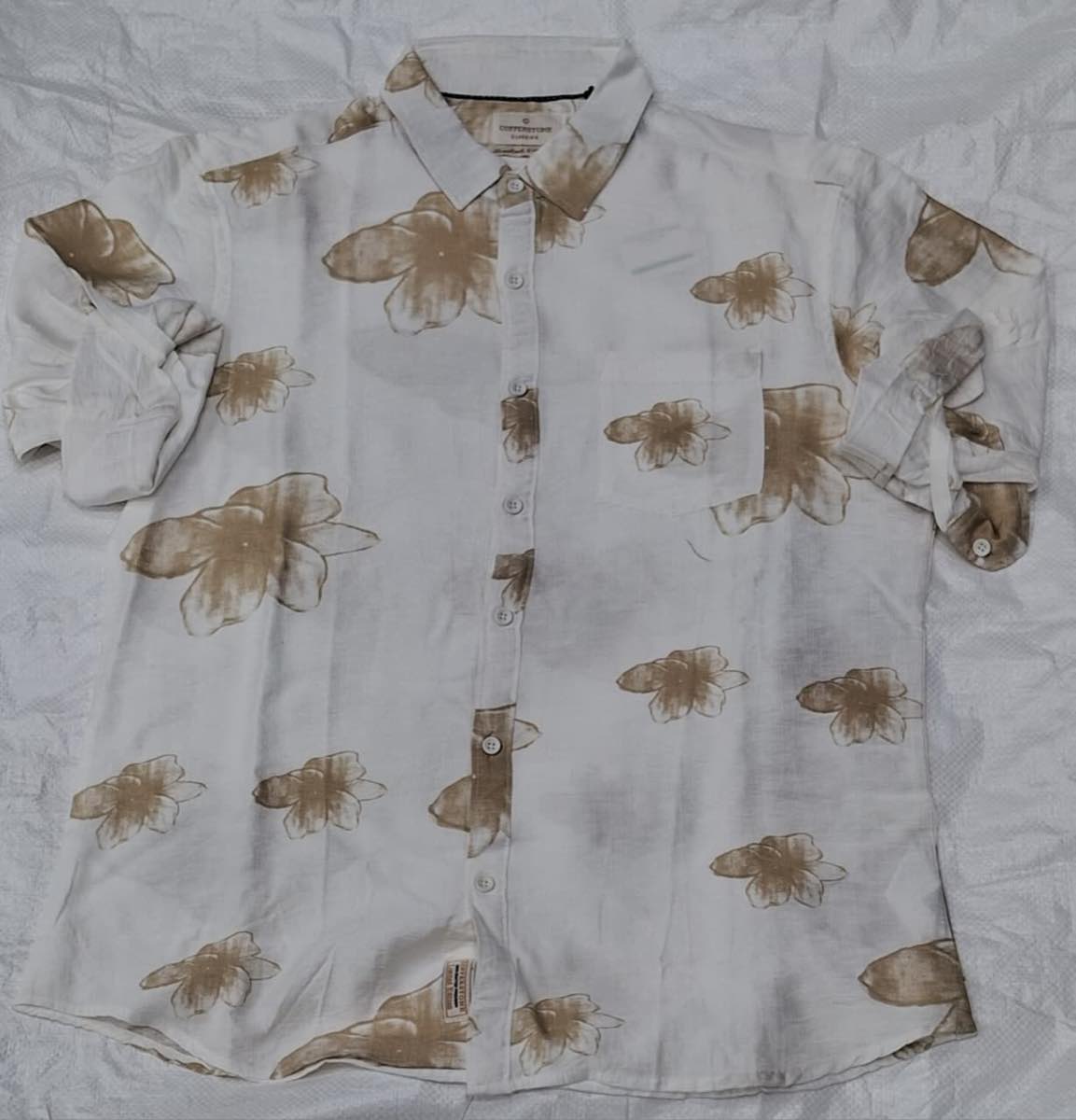
This white shirt with a gold floral print shows how the principle works for relaxed wear. The white ground keeps it light and wearable in warm weather, while the print sets the colour direction for the rest of the outfit — warm neutral trousers and brown shoes. It is a shirt for holidays and weekends rather than the office, where a white ground is best paired with fine, quiet patterns. The patterns guide and our comparison of striped and checked formal shirts go further.
Workplace, season and climate
Different workplaces tolerate different ranges of colour. Conservative fields generally favour white and blue; creative offices welcome a wider palette. When joining a new workplace, starting at the more formal end and adjusting once you understand the culture is a sensible approach. The meetings wardrobe covers important days in detail.
Climate plays a part too. In hot, humid weather, lighter colours look and feel fresher, and they show less of the strain of a long day than very dark shirts in direct sun. Breathable cotton in pale shades is the most practical everyday combination for a Mumbai working week.
Building your own palette
A practical way to build a colour wardrobe is in rings. Start with whites and light blues — enough to cover most of the week. Add pale pink, lavender or soft grey, choosing the one or two that suit your complexion best. Then add fine stripes and small checks that combine those colours. Bolder colours and prints form an outer ring for social occasions. Our guide to building a versatile office shirt wardrobe explains this structure in full, and the blue and white entries in the Formal Shirt Index show the core in context.
Colour with a purpose
Choosing shirt colours for professional dressing is about usefulness first and personality second. White and light blue form the foundation; pale pink, lavender and grey add range; deeper colours and prints have their place outside the office. Match the shade to your complexion, consider what it sits beside, and choose for the most formal moment of your day. Do that and colour becomes a quiet ally rather than a daily question.
To compare shirt colours against your own complexion in natural light, visit Options Mall in Vile Parle West or call +91 8369381345 to ask about current formal shirt styles. You will find the address on the contact page.